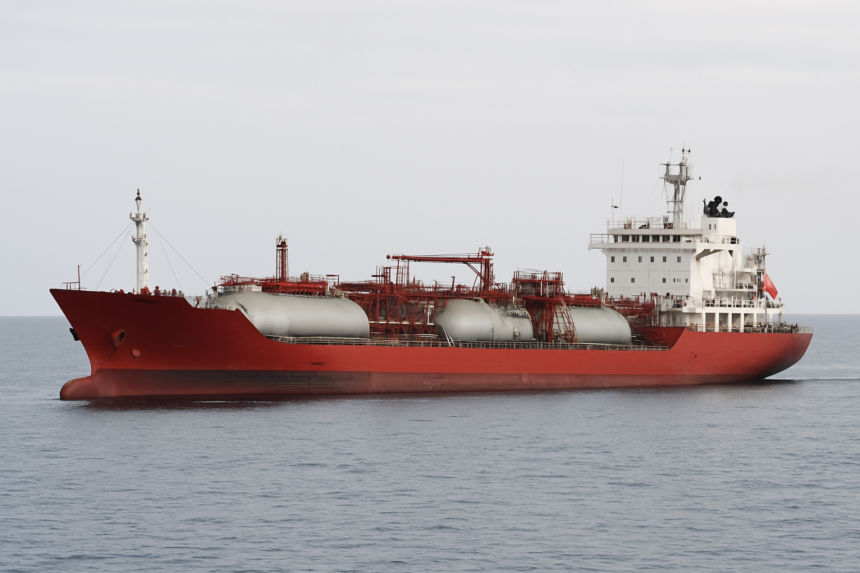
The United States Treasury Department has imposed a new round of sanctions targeting an international network implicated in the smuggling of Iranian liquefied petroleum gas (LPG). This latest action is part of a broader strategy to restrict Tehran’s energy exports and financial operations amidst escalating U.S. pressure.
The Sanctioned Network
Announced by the Office of Foreign Assets Control (OFAC) on Friday, the sanctions are aimed at a network comprising traders, shipping companies, vessels, and financial intermediaries reportedly transferring hundreds of millions of dollars’ worth of Iranian LPG disguised as exports from Oman to buyers across South and East Asia. This operation reportedly utilized the services of front companies based in the United Arab Emirates and China, alongside a range of foreign bank accounts, to conceal the origins of these shipments.
The sanctions specifically identify Afghan national Sarbaz Abdul Zada and Turkish national Mohammad Shakol Mihandoust as pivotal figures orchestrating this operation. Treasury officials noted that the duo leveraged a series of UAE-based trading firms, including Butani Trading LLC and ADH Energy FZE, to facilitate the illicit trade.


Details of Recent Shipments
Among the operations cited by Treasury, one involved approximately 750,000 barrels of LPG transported aboard the LPG carrier Sevan to Bangladesh. This vessel was reported to have carried Iranian-origin cargoes in recent months, further emphasizing the depth of the illicit network’s activities. In addition, another shipment of 22,000 metric tons of LPG was documented arriving in Bangladesh in October 2025.
The sanctions also extend to Shanghai Qianye Energy Co., Ltd., a Chinese company associated with Mihandoust, along with six LPG tankers—MD 23, Glendale, Amir Gas, Gas Lagoon, Mile, and Gaz GMS—accused of collectively transporting millions of barrels of Iranian LPG over several years.
In conjunction with these measures, the Treasury also sanctioned Mehrdad Geramian Nik and Partners Company, an Iranian exchange house alleged to play a significant role in transferring hundreds of millions of dollars in foreign currency for sanctioned banks in Iran, thereby contributing to the regime’s shadow banking system.
Market Impact and U.S. Strategy
This latest round of sanctions falls under the administration’s “Economic Fury” campaign, which aims to cut off Iran’s financial lifelines across oil, gas, and petrochemical sectors while concurrently tightening maritime enforcement. The U.S. military has intensified operations, including multiple boardings of sanctioned tankers in the Indian Ocean since April, highlighting a shift towards a more aggressive maritime posture in addressing violations linked to Iran’s energy trade.
The Operational Read
For operators within the LPG market, the implications of these sanctions are profound. As the U.S. continues its aggressive enforcement, the risk profile for vessels operating in the Indian Ocean and surrounding regions is substantially increased. Companies must remain vigilant regarding ship inspections and the authenticity of cargo documentation while navigating supply chains that may be affected by these sanctions. The seizure of vessels and assets could lead to considerable disruptions in the LPG supply chain, prompting buyers and charterers to reassess risks and consider diversifying their sources. Monitoring developments in U.S. maritime policy and Iranian responses will be crucial for stakeholders involved in global energy markets.