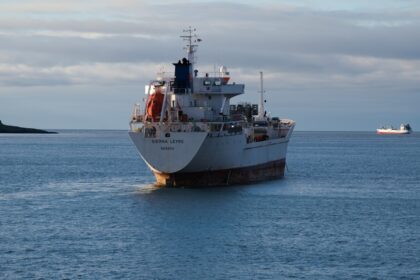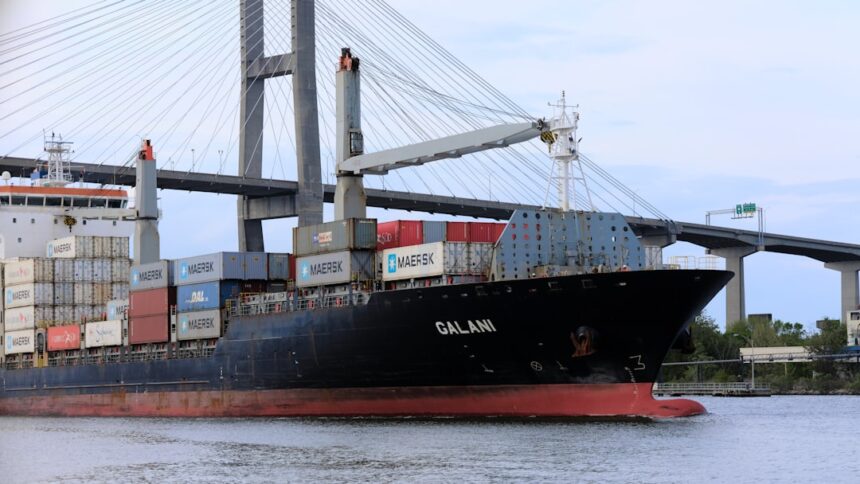
The recent court ruling following the collision between the bulk carrier Solong and the Stena Immaculate has significant implications for maritime liability law. The incident, which occurred in March 2025, resulted in a severe fire and the tragic loss of a crew member aboard the Solong. Earlier this year, the Master of the Solong was convicted of gross negligence manslaughter, prompting both the vessel’s owners and demise charterers to seek limitations on their liability under the Convention on Limitation of Liability for Maritime Claims (LLMC) 1976.
The Incident
The Solong collided with the Stena Immaculate while the latter was anchored, carrying a cargo of over 220,000 barrels of jet fuel. This collision led to catastrophic consequences, including a fiery explosion, which spurred legal actions focusing on liability and damages. The owners of the Stena Immaculate pursued damages, citing the incident rendered their vessel a constructive total loss and demanding compensation for settled cargo and crew claims.
Legal Proceedings
In response to the Stena Immaculate’s claims, the Solong’s owners applied to strike out the defense presented by Stena’s owners. The judgment rendered by Judge Andrew Baker focused on the core of the LLMC 1976 provisions, particularly Article 4, which outlines conditions under which owners may limit liability. The court acknowledged the overwhelming consensus that the right to limit liability is “virtually unbreakable,” except under rare circumstances involving severe misconduct.



In reviewing the interpretation of “intent to cause such loss,” the judgment highlighted the standards established in a recent IMO Resolution (A.1164(32)). This resolution clarifies that the threshold for breaking the right to limit liability requires a level of culpability akin to willful misconduct—exceeding gross negligence—and stresses that intent and recklessness must be considered in their combined totality.
Market Impact
The evolving legal context surrounding maritime liability limitation holds implications not only for shipowners but also for underwriters and operators. It underscores the need for comprehensive risk assessments prior to a ship’s deployment and revisiting insurance policies to ensure adequate coverage aligns with emerging liability precedents. With the possibility of escalating legal disputes over similar incidents, operators may need to brace for higher insurance premiums and more stringent risk assessment measures.
The Operational Read
The ruling in this case sends a strong message regarding the thresholds required to limit liability under the LLMC 1976, reaffirming a rigorous standard that necessitates more than gross negligence. For operators, this highlights the critical importance of adherence to navigational and operational protocols to mitigate risks and potential liability exposure. The outcome of similar disputes may shape future operational practices and insurance approaches, as operators seek to navigate the complexities of maritime law with increased caution.