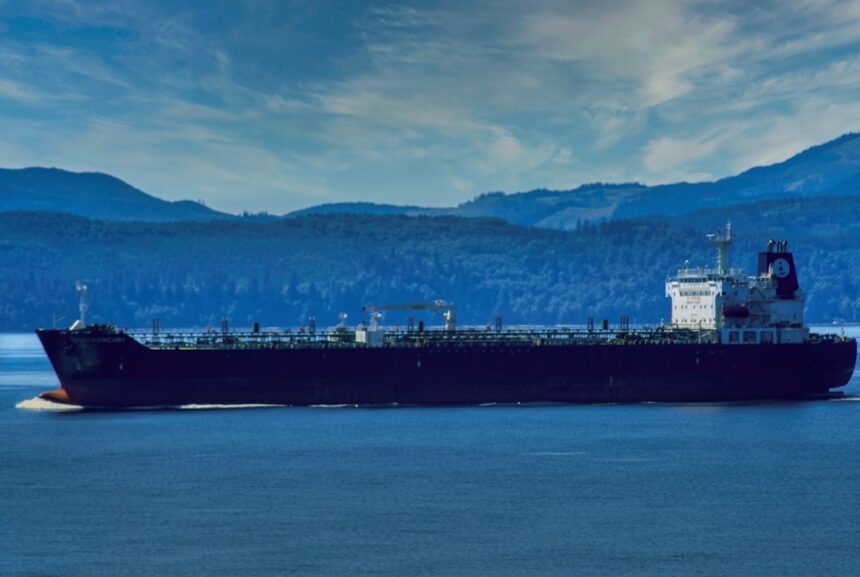
The ongoing geopolitical instability in the Strait of Hormuz has significantly transformed the dynamics of very large crude carrier (VLCC) trade. Throughout the first half of 2026, trade flows have been notably affected, leading to Venezuela emerging as a key player in the global shipping market.
The Shift in VLCC Volumes
Data from recent assessments indicates that VLCC volumes have experienced a drastic contraction, falling from 277.8 million tonnes in Q3 2025 to just 201.4 million tonnes in Q2 2026. This decline represents the lowest transport volume recorded over an observed data series spanning from Q1 2025 to Q2 2026, and marks a 22% decrease compared to the 259.8 million tonnes seen in Q2 2025.
The contraction in volumes has been primarily concentrated in the Middle East Gulf, with liftings from key oil-producing nations—Saudi Arabia, the UAE, Iraq, and Kuwait—plummeting from 163.3 million tonnes in Q2 2025 to 97.6 million tonnes in Q2 2026, signifying a 40% reduction. Specifically, Saudi Arabia’s contributions dropped from 74.2 million tonnes to 47.9 million tonnes, while the UAE and Iraq also reported substantial decreases in their respective liftings.


Venezuela’s Rising Role
In contrast to the declining Middle East volumes, non-Middle East Gulf nations have adapted, capturing redirected demand. Venezuela has emerged significantly, with its crude liftings increasing from 1.4 million tonnes in Q1 2026 to 6.5 million tonnes in Q2 2026. The number of sailings from Venezuela more than doubled, with 22 voyages in Q2 2026, and an average cargo size of approximately 294,000 tonnes per voyage. Key shipping operators such as Trafigura have played pivotal roles, contributing to a large portion of these voyages.
Meanwhile, US Gulf and Brazilian export volumes fell sharply together, emphasizing the broader shift in operational patterns as operators seek alternative loading regions. As such, the global VLCC market landscape continues to evolve amid these ongoing challenges.
Negotiations and Future Outlook
As the shipping community grapples with these changes, negotiations regarding the transit framework for the Strait of Hormuz are still unresolved. Key discussions are taking place among multiple stakeholders, including the US and Iran, focusing on routing and corridor governance, which remain critical to securing safe passage for vessels.
Despite this, the impact on the VLCC market is clear: Gulf-loading volumes remain subdued while geopolitical tensions and insurance costs maintain heightened freight risk levels. Until a stable transit arrangement is established, shipping operators will need to navigate these complexities with caution.
The Operational Read
The current situation presents significant operational challenges for tanker operators. The 40% drop in Middle Eastern VLCC volumes indicates a considerable re-evaluation of supply chains and risk assessments in the region. Operators might face disruptions from elevated insurance premiums and stiffer freight rates as demand experiences fluctuations. Attention should be given to how vessel routing strategies might evolve and the distribution of loadings as companies seek to mitigate risks associated with the Strait of Hormuz. This geopolitical instability further underscores the necessity for diversification in loading areas as markets adapt to ongoing changes.