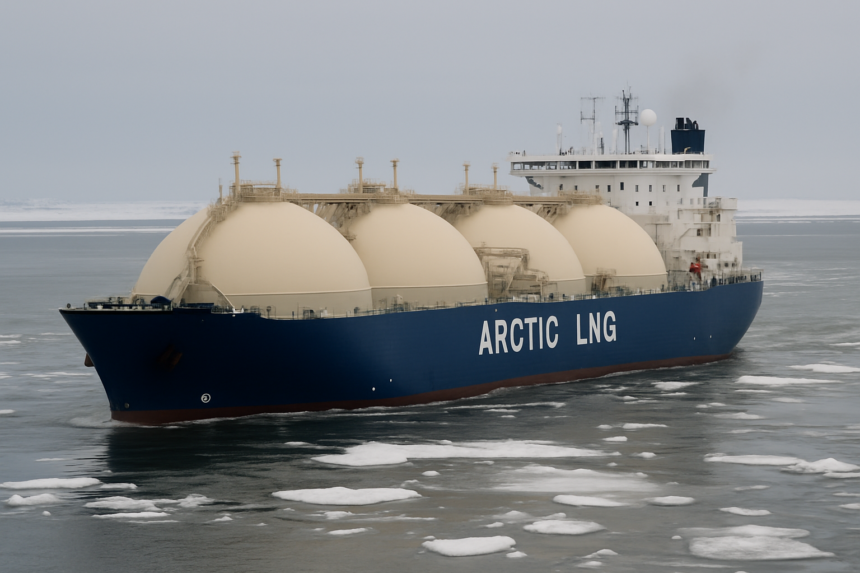
On June 3, satellite imagery captured the sanctioned Russian liquefied natural gas (LNG) carrier, Christophe de Margerie, making a rare early-season eastbound voyage along the Northern Sea Route, escorted by the nuclear icebreaker Ural. This transit marks only the third known occurrence of an eastbound passage by a Yamal-class Arc7 LNG carrier at this early stage of the navigation season, which typically experiences challenging ice conditions.
Details of the Transit
The images depict the convoy navigating through ice-covered waters in the East Siberian Sea, east of the New Siberian Islands, carrying cargo sourced from the significant Arctic LNG 2 project. Analysis of vessel tracks indicates that the convoy encountered persistent ice challenges, necessitating several course adjustments to identify the most favorable routes through the ice.
This year’s early transit follows precedents set in 2020, where previous voyages by Christophe de Margerie and Vladimir Voronin were able to successfully complete passages under similar early-season conditions. The convoy’s path is noted to align with shipping patterns observed during the summer of 2025, a year marked by demanding operational conditions necessitating extensive icebreaker support.


Market Implications
As the convoy approaches the Siberian coastline near Pevek, significant questions arise regarding the vessel’s ultimate destination. Industry analysts are debating whether the cargo will be discharged at the Koryak floating storage unit off the Kamchatka Peninsula or continue directly to China’s Beihai LNG terminal. A discharge at Koryak would enable a quicker return to Arctic LNG 2 for additional cargo loading, a critical factor given the limited operational capacity of the Arc7 fleet.
The early deployment of Christophe de Margerie has left its sister vessel, Alexey Kosygin, as the only other Arc7 LNG carrier currently transporting cargo towards ice-free waters near Murmansk for ship-to-ship transfers. As Kjell Eikland, an independent shipping analyst noted, the move raises queries about potential yard work in Zhoushan, China, particularly due to the vessel’s history of damage on previous attempts.
The Operational Read
This unexpected early-season transit by Christophe de Margerie underscores the operational complexities that persist in the Arctic shipping corridor. Despite advances in icebreaker technology, operators face rigid constraints due to unpredictable ice patterns, highlighting the need for robust planning and coordination. The demand for vessel escorts and the potential for cargo delays underscore the need for diversification in Arctic shipping capabilities. Stakeholders should closely monitor ice conditions, vessel availability, and shifts in operational patterns throughout the season, as these factors will significantly impact shipping logistics and capacity management in the Arctic region.