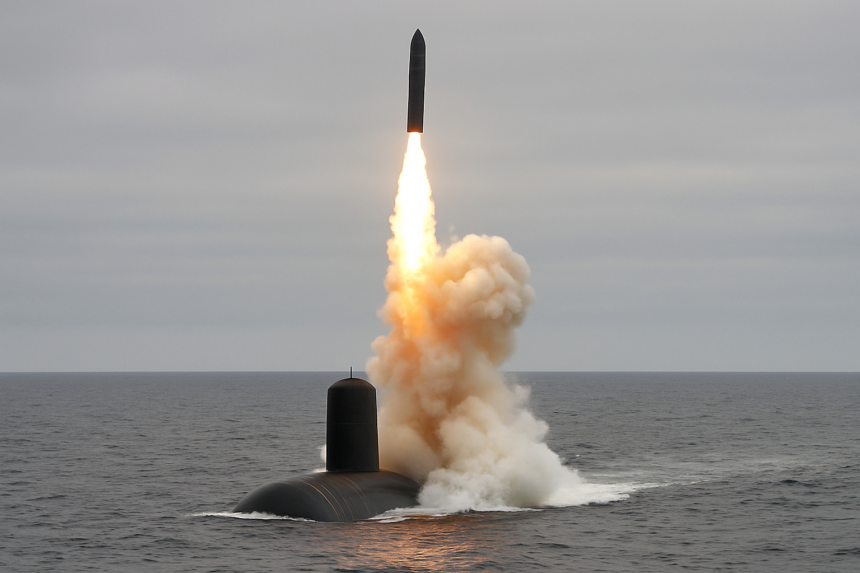
On July 6, 2026, China’s People’s Liberation Army Navy conducted a missile test from a nuclear-powered submarine, launching the projectile into international waters of the Pacific. According to state media outlet Xinhua, the missile carried a dummy warhead and was part of the annual military training exercises with no specific target. The launch, which occurred at 12:01 p.m. local time, has raised considerable concerns within regional powers such as Japan, Australia, and New Zealand, all of which responded critically.
Regional Reactions
Australian Foreign Minister Penny Wong characterized the missile test as “destabilizing,” emphasizing the context of China’s rapid military buildup that has seen a lack of transparency regarding its intentions. Furthermore, the test coincided closely with the signing of an important defense alliance between Australia and Fiji, known as the Ocean of Peace Alliance. This agreement commits the two nations to mutual defense in the event of an attack, raising implications regarding security dynamics in the Pacific.
New Zealand Foreign Minister Winston Peters expressed deep concern, highlighting that the missile test occurred within hours of notifying New Zealand authorities. He stated this development was unwelcome and emphasized the region’s disinterest in being a testing ground for Chinese military capabilities.

International Implications
Japan’s government indicated it had received advance notification of the missile test and reiterated its grave concerns toward the increasing activity of the Chinese military. Although Japanese officials reported that the missile landed outside Japan’s exclusive economic zone (EEZ) and did not damage any national assets, the heightened military activity has prompted Tokyo to urge China to reconsider its testing activities.
The spokesperson for China’s foreign ministry, Mao Ning, defended the test, arguing that it was conducted safely and professionally, while advising other countries not to overinterpret the situation. This response indicates Beijing’s intent to reassure its regional neighbors, despite the evident distress the missile test has caused.
The Operational Read
The recent missile launch underscores the increasing militarization of the South Pacific and highlights operational challenges for shipping and maritime security in the region. For operators and mariners, rising military actions from major powers like China necessitate a reevaluation of route planning and risk management strategies, particularly in areas adjacent to defense collaborations among Australia, New Zealand, and their allies. Furthermore, this development could result in increased war-risk premiums and insurance costs for vessels operating in nearby waters. Continuous military activities in the region may compel operators to adapt their protocols to mitigate potential disruptions, including unanticipated security alerts or operational delays.