A U.S. Navy-operated autonomous surface vessel (ASV) built by Saronic successfully rescued two U.S. Army aviators after their AH-64 Apache helicopter crashed near the coast of Oman. This incident, which took place on June 8, marks a significant milestone as it appears to be the first publicly reported personnel recovery conducted by an unmanned surface vessel, according to U.S. Central Command (CENTCOM).
The Incident
The Apache helicopter was on patrol in the volatile region of the Strait of Hormuz when it went down, prompting swift action from U.S. Naval Forces Central Command and U.S. 5th Fleet’s Task Force 59. The downed pilots were reportedly rescued within approximately two hours and were later confirmed to be in stable condition. CENTCOM is currently investigating the cause of the crash, amid claims from President Donald Trump that Iranian forces were responsible for the incident.
The Role of Autonomous Systems
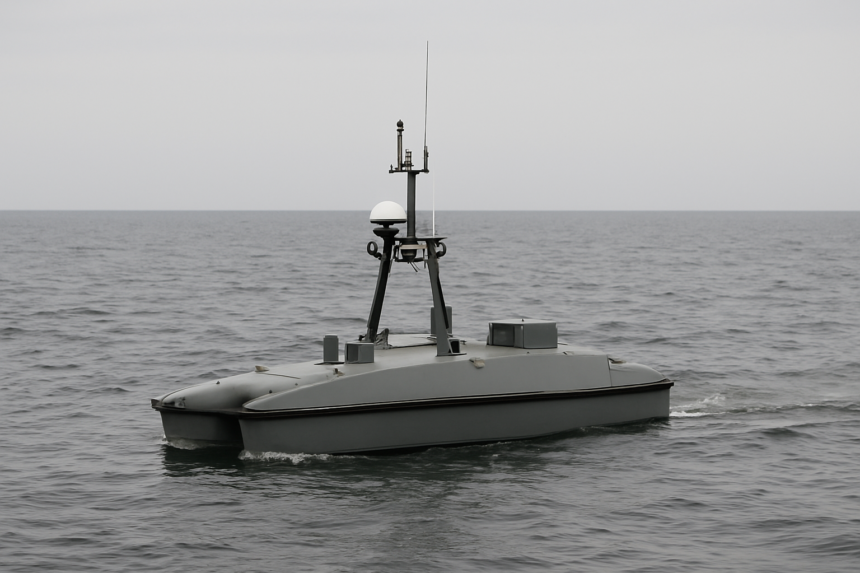
Following the incident, the Saronic Corsair ASV was dispatched to recover the pilots from the water. Navy Capt. Tim Hawkins noted that the drone efficiently transported the aviators to a designated location, where they were subsequently hoisted aboard a helicopter for further medical assistance. This operation serves to reinforce the effectiveness of unmanned systems in real-time rescue missions, enhancing response capabilities where traditional manned operations may face challenges.

Implications for Naval Operations
Saronic’s Corsair is a notable 24-foot autonomous surface vessel designed for various maritime roles including security, surveillance, and logistics. It has the capability to carry payloads of up to 1,000 pounds and can operate independently for distances exceeding 1,000 nautical miles. Equipped with advanced technology such as radar, cameras, and autonomous navigation software, the Corsair can execute prolonged missions with minimal human intervention. This reflects a significant trend within the military towards the integration of unmanned maritime systems, emphasizing operational readiness and efficiency in complex environments.
The Operational Read
The successful rescue operation conducted by Saronic’s Corsair underscores the evolving role of unmanned vessels in military operations. As the U.S. Navy increasingly incorporates autonomous systems into its fleet, the implications for operational strategy are profound. Enhanced capabilities allow for rapid response in high-risk situations, exemplifying how unmanned technology can not only augment traditional naval operations but potentially redefine them. Moving forward, the industry will likely see a greater emphasis on developing and deploying advanced autonomous systems, particularly in regions subject to geopolitical tensions.