

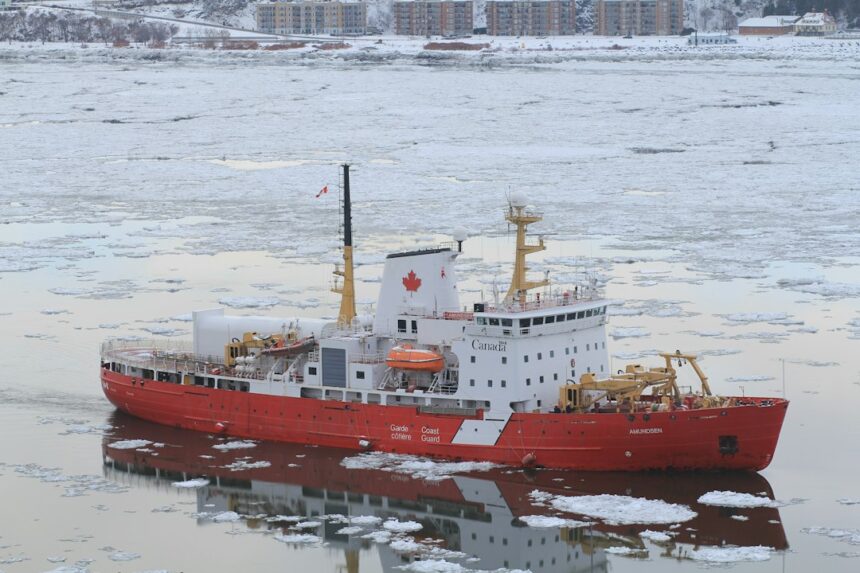
The U.S. Coast Guard Cutter Munro has concluded a 112-day Arctic patrol, returning to its homeport in Alameda, California. This mission was primarily aimed at monitoring the activities of Chinese research vessels and enforcing U.S. fisheries laws, highlighting rising geopolitical tensions in the region.
The Patrol Overview
During the deployment, the 418-foot national security cutter covered in excess of 23,000 nautical miles throughout the Bering Sea and Arctic Ocean. Operating under the Coast Guard Arctic District, Munro’s efforts under Operation Frontier Sentinel included surveillance of three Chinese-flagged research vessels operating within the U.S. Exclusive Economic Zone (EEZ) near Alaska. This operation reinforces the U.S. commitment to maintaining oversight of foreign maritime activities, specifically in light of the increasing assertiveness of both Chinese and Russian fleets.
The Munro notably tracked the Chinese research vessels Xue Long and Xue Long 2, which navigated through U.S. waters during July. While international law permits such transits, conducting marine scientific research in these waters necessitates prior authorization from U.S. authorities. The Coast Guard’s monitoring operations aim to ensure compliance with such regulations, allowing for prompt responses to unauthorized activities.

International Collaboration and Training
In addition to overseeing foreign vessels, the Munro conducted joint exercises with the Royal Canadian Navy that emphasized maritime law enforcement and improved situational awareness of vessel activities in Arctic waters. This partnership is vital as both countries seek to enhance cooperation in a region challenged by environmental factors and geopolitical challenges.
The cutter also participated in Operation Tundra Merlin, which integrated U.S. and Canadian military assets to assess communications and coordinated responses to potential threats. Such collaborative efforts are essential for building a robust framework for security in the increasingly strategic Arctic region.
Challenges and Operational Limitations
Beyond securing national interests, the Munro’s mission included inspections of commercial fishing vessels, supporting the protection of a fishing industry valued at nearly $6 billion in Alaska. However, the Coast Guard is facing increased demands in the Arctic, operating with a limited number of ice-capable vessels. The medium icebreaker Healy, crucial to high-latitude missions, has been sidelined due to an engineering casualty, forcing the Coast Guard to rely more on national security cutters and aircraft for continued surveillance in these critical waters.
The Operational Read
The conclusion of Munro’s Arctic patrol underscores the complexities of maintaining U.S. presence in a region marked by heightened international activity. The Coast Guard’s efforts not only focus on monitoring foreign vessels but also on enforcing national regulations concerning fisheries and marine research. As Chinese presence in the Arctic becomes more pronounced, operators must remain vigilant regarding compliance with international laws and potential geopolitical implications. The reliance on limited ice-capable assets may hinder the effectiveness of future patrols, raising questions about the adequacy of resources against the backdrop of growing foreign maritime engagements.