In a significant escalation of military hostilities, Iran launched missiles at two U.S. air bases in Jordan on Monday, responding to prior U.S. strikes on Larak Island. The conflict marks the first exchange of fire since late July, highlighting ongoing tensions in the strategically important Strait of Hormuz, through which a substantial portion of global crude oil flows.
The Incident
On Sunday, U.S. military assets targeted Iranian missile launchers on Larak Island after recognizing preparations for deploying sea mines in the Strait of Hormuz. Three fatalities were reported as a result of this operation, two of whom were linked to the Islamic Revolutionary Guard Corps. In a reaction that underscores the fraught security situation, Iran launched missiles at U.S. bases, with President Donald Trump declaring intentions to respond decisively. Reports indicate that U.S. air defenses successfully intercepted the incoming missiles.
Market Impact
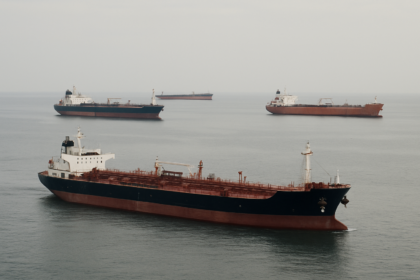
The renewed military actions have raised alarms over secure passage in the Strait of Hormuz, a critical chokepoint for oil transportation. Economic sanctions imposed by the U.S. on Iran’s economy have intensified, with Treasury Secretary Scott Bessent indicating that these measures are forcing Iran into aggressive postures. The Iranian military’s claim of a supertanker fire, purportedly caused by naval mines, was dismissed by U.S. military officials, further complicating the situation.

Operator Response
Shipping operators are advised to heighten profile and vigilance in the region, as the potential for further military engagements remains high. Charterers may experience shifts in freight costs and insurance premiums due to increased risk, particularly around the Strait of Hormuz. In light of these developments, operators should consider contingency plans and the feasibility of alternative route options.
The Operational Read
The escalation of hostilities between the U.S. and Iran presents complex operational challenges for maritime stakeholders in the region. Ongoing military actions significantly raise the risk profile for vessels transiting the Strait of Hormuz, prompting operators to reassess security measures and potential rerouting. As sanctions continue to stifle Iran’s economy, further kinetic responses could alter operational patterns significantly. Stakeholders should closely monitor military developments and the implications for laytime and demurrage in the region, as well as potential impacts on global oil supply chains.