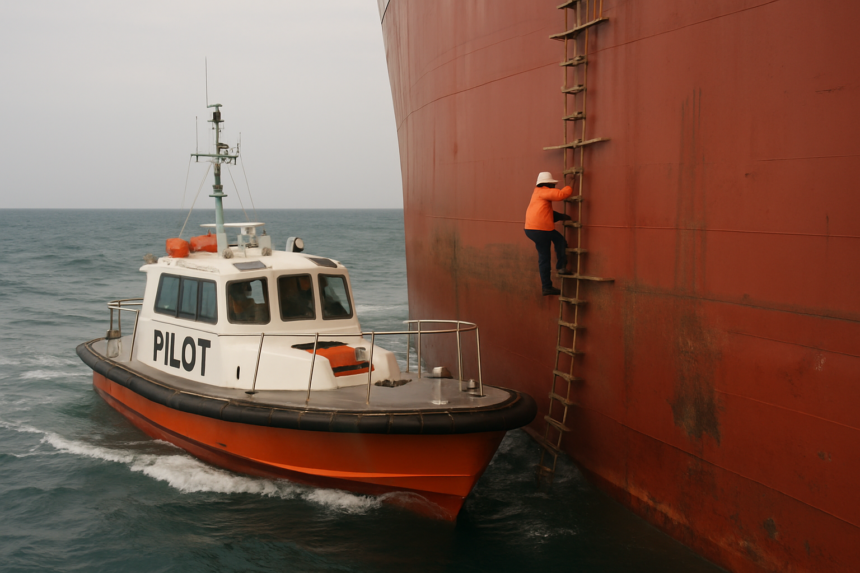
In June 2025, the International Maritime Organization’s Maritime Safety Committee (MSC) adopted significant amendments to the International Convention for the Safety of Life at Sea (SOLAS) Regulation V/23, focusing on enhancing the safety of pilot transfer arrangements. These changes introduce new mandatory performance standards for both new and retrofitted installations aboard vessels.

New Performance Standards Overview
The amendments, formalized in resolution MSC.572(110) and resolution MSC.576(110), mandate that all pilot transfer arrangements be designed, constructed, secured, and installed to align with the new performance standards. For arrangements installed on or after January 1, 2028, these criteria must be met from the outset. For existing SOLAS-compliant vessels, verification of compliance for previously installed arrangements must occur by the first survey following January 1, 2029.
The standards represent a critical shift in ensuring safe pilot boarding and disembarking procedures, applicable across various operational conditions, including different draught and trim scenarios. For non-SOLAS vessels, compliance must be established by the first survey after January 1, 2030, bringing regulatory consistency across all ship categories.


Implications for Ship Managers
The new regulatory framework necessitates that ship managers begin evaluating the compliance status of their vessel’s pilot transfer arrangements immediately. Modifications may include updating securing points, winch reels, stanchions, and handholds, which could require extensive modifications or even hot work during dry dockings. Planning these updates early is essential to ensure readiness for inspections and surveys.
Effective January 1, 2028, all pilot transfer arrangements across the fleet must also adhere to provisions related to inspection, stowage, maintenance, and operation as specified in parts D and E of the mandatory performance standards. Compliance with these aspects is vital for both operational efficiency and crew safety.
For complex transfer arrangements or substantial modifications, operators are encouraged to seek plan approval through the My Services portal to mitigate potential compliance risks. The updated illustration of pilot transfer arrangements in MSC.1/Circ.1428/Rev.1, known as the IMPA poster, serves as a reference, but should not be exclusively relied upon for compliance verification.
Why It Matters
The adoption of new pilot transfer arrangement standards is crucial for enhancing the safety of maritime operations. Ship managers and operators face a pressing need to evaluate current systems and implement necessary changes to meet the upcoming regulatory deadlines. These modifications not only ensure compliance but also contribute significantly to the safety of pilots and crew during transfers. The push for enhanced safety measures reflects an ongoing commitment within the shipping industry to reduce risks associated with pilot boarding operations. Stakeholders should monitor the regulatory landscape and prepare to adjust operational protocols accordingly to align with these evolving standards.