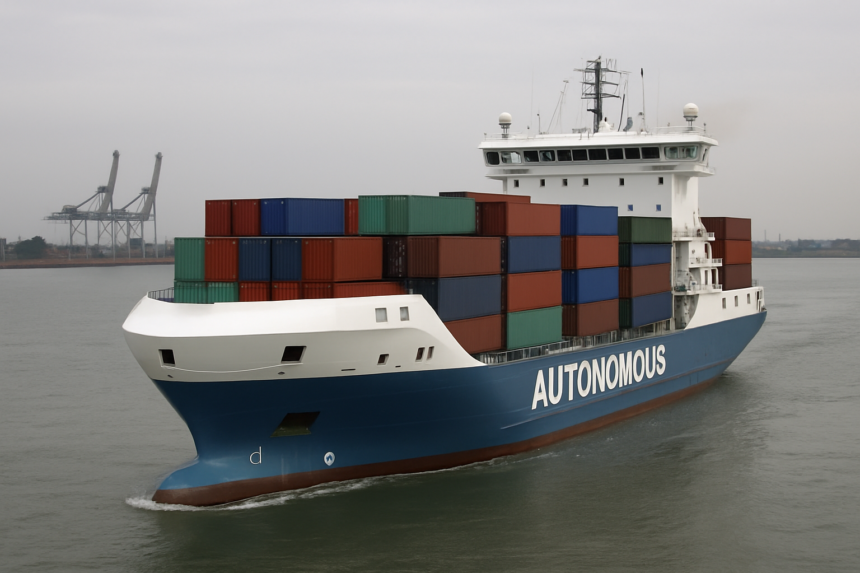
The International Maritime Organization (IMO) has officially adopted the International Code of Safety for Maritime Autonomous Surface Ships (MASS Code) during its 111th Maritime Safety Committee (MSC) session held in London from May 13 to 22, 2026. This significant development marks a crucial milestone in the regulation of vessels operating with limited or no human crew.
The MASS Code
The MASS Code establishes a comprehensive framework for the safe operation and design of remotely controlled and autonomous ships within the global shipping industry. It aims to uphold the levels of safety, security, and environmental protection that are mandated for traditional ships. Notably, vessels operating under this code must adhere to the International Convention for the Safety of Life at Sea (SOLAS) principles, ensuring a basic level of operational safety.
Despite its non-mandatory status, the MASS Code provides member states the flexibility to trial its implementation, with the intention of fully integrating it into mandatory regulations under SOLAS in the future. This approach allows for a gradual adoption and assurance that both existing and new technologies can coexist safely.

Requirements and Focus Areas
The new regulations stipulate multiple requirements across various operational areas, including navigation, remote operations, connectivity, fire safety, and search and rescue protocols. A strong emphasis has been placed on risk assessments, robust design systems, and the establishment of Remote Operations Centres (ROCs). A critical aspect of the MASS Code is the requirement for human oversight; the master of the ship retains ultimate responsibility, even when not physically present onboard.
IMO Secretary-General Arsenio Dominguez heralded the adoption of the MASS Code as a landmark achievement, positioning the organization at the forefront of regulating emerging technologies. The code not only facilitates innovation but also ensures that safety and accountability remain central to maritime operations as technological advancements unfold.
Looking Ahead
Following this initial adoption, several key timelines have been outlined for the future development of the MASS Code. In December 2026, the MSC plans to reconvene the MASS Working Group to establish a framework for an Experience-Building Phase, which will further assess the non-mandatory guidelines. The next significant milestone includes anticipated binding regulations by 2028, following a review of the experiences garnered during the testing phase. The mandatory code is expected to be adopted by July 2030, with enforcement projected to begin on January 1, 2032.
The Operational Read
The migration towards autonomous shipping technology inherently alters the operational dimensions for ship operators, crews, and charterers. With the introduction of the MASS Code, operators must adapt to new regulatory frameworks that prioritize technological innovation while ensuring compliance with safety standards. The ongoing emphasis on human oversight underlines the necessity for crews to maintain proficiency in traditional maritime skills, even as automation takes hold. As the industry pivots towards these new operational models, stakeholders should focus on the outcomes of trials and the development of the mandatory regulations to ensure alignment with evolving market demands and safety expectations.