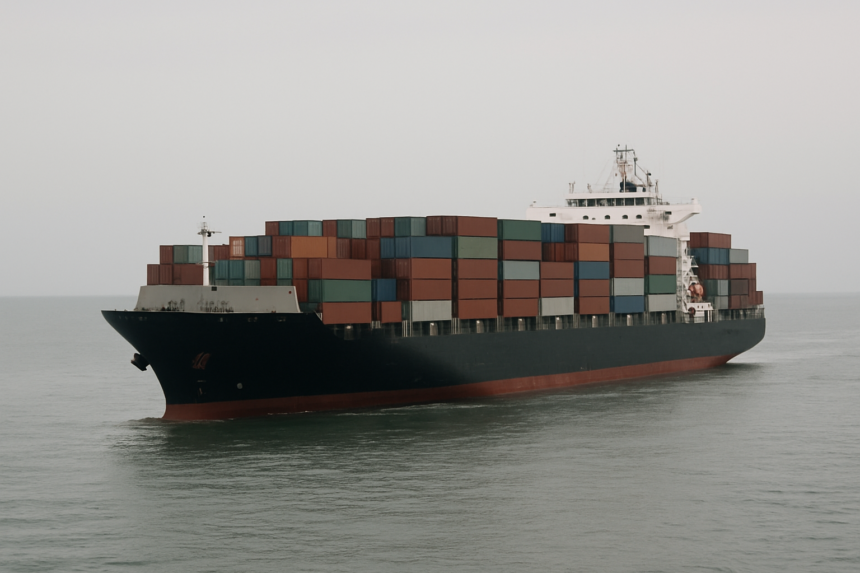
On June 25, 2026, the Singapore-flagged container ship Ever Lovely, operated by Evergreen Marine Corporation, was struck on her starboard side by an unidentified projectile as she navigated the southern corridor of the Strait of Hormuz, approximately 7.5 nautical miles southeast of Dahit, Oman. The United Kingdom Maritime Trade Operations (UKMTO) confirmed the incident in Warning 074-26, noting damage to the vessel’s bridge structure but reporting no casualties or environmental impact.
The U.S. government swiftly attributed the strike to a drone launched by Iran’s Islamic Revolutionary Guard Corps Navy (IRGC-N), a claim supported by multiple official sources. However, Iran has not acknowledged its involvement in the attack. Following this incident, the self-styled Persian Gulf Strait Authority, established by Tehran to manage maritime traffic, ominously declared on social media that vessels deviating from their designated routes would not be protected under their guarantee of safe passage, thus placing the burden of risk on operators and vessel commanders.
Geopolitical Context
The implications of this attack are profound, as Iran’s denial of legitimacy to the southern route—promoted as a safe passage by the International Maritime Organization (IMO) and the Sultanate of Oman—suggests heightened danger for commercial shipping in the region. Iran’s warning echoes broader tensions that have escalated since February, when the Strait of Hormuz was effectively closed to shipping following military actions involving U.S. and Israeli forces. The situation has raised alarms over maritime security, with ongoing reports of fatalities among seafarers since the outbreak of hostilities, including fourteen fatalities recorded since March.

Impact on Maritime Operations
This incident occurred on the International Maritime Organization’s Day of the Seafarer, a date marked to acknowledge the contributions and risks faced by maritime professionals worldwide. Just days prior, on June 23, IMO Secretary-General Arsenio Dominguez announced a temporary suspension of the Strait of Hormuz Evacuation Framework, designed to facilitate the safe departure of vessels and crewmembers amid escalating tensions. Dominguez’s decision to pause the initiative, intended to reassure the maritime community of safety guarantees, has added another layer of complexity to an already perilous environment.
Ever Lovely was conducting an independent commercial transit rather than following the evacuation guidelines outlined in the IMO framework. The attack, particularly occurring on a day dedicated to honoring seafarers’ sacrifices, serves as a stark reminder of the vulnerabilities faced by vessels operating in contested waters.
The Operational Read
This incident underscores the operational challenges for maritime operators in the Strait of Hormuz. The increasing hostility from the IRGC-N complicates navigation routes and places operators in precarious situations when balancing compliance with international guidelines against regional threats. As the maritime industry contemplates the viability of transit options, close monitoring of geopolitical developments and Iranian maritime intentions will be crucial. Vessels are likely to assess risk levels, potentially leading to route alterations or increased war-risk insurance premiums. Future incidents may redefine the operational landscape, emphasizing the importance of contingency planning and enhanced security measures for vessels operating in these strategic waters.