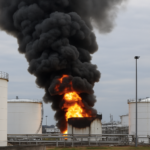
Ust-Luga, one of Russia’s most significant export ports on the Baltic Sea, experienced a drone strike that ignited a fire and prompted emergency response efforts. According to Alexander Drozdenko, governor of the Leningrad region, the attack occurred early on Tuesday morning, resulting in damage within the port zone.
Emergency services swiftly mobilized to manage and contain the fire while Russian authorities claimed to have intercepted 44 drones involved in the assault. The incident underscores the ongoing tensions in the region as military actions continue to impact maritime operations.
The Incident
The attack on Ust-Luga port suggests an escalation in the use of drone technology in warfare, highlighting vulnerabilities in infrastructure that is vital for managing trade routes. As a principal port for exporting commodities, incidents such as this can have substantial implications for supply chain reliability in the Baltic region.

Ust-Luga serves as a key node for the export of various goods, including oil and timber, making its operational status critical. The drone strike raises immediate concerns regarding the security protocols in place to protect against such aerial threats, particularly given the heightened military activity in the area.

Market Impact
While the immediate impact on shipping operations remains to be fully assessed, the disruption caused by the fire may lead to delays and increased operational costs for vessels that rely on Ust-Luga for loading and unloading cargo. The incident could potentially strain the logistics networks throughout the region, leading to price fluctuations and increased demurrage costs as vessels await safer conditions.
Moreover, any perception of heightened risk in the region could affect the pricing of war-risk premiums for operators navigating the Baltic Sea, leading to precautions such as rerouting and enhanced insurance coverage.
Operator Response
The response from shipping companies operating in and around Ust-Luga will be crucial. Operators are expected to enhance their risk assessments, especially involving vessel routing around potential conflict zones. Companies may also explore further measures to bolster security, including collaboration with local authorities for enhanced intelligence on aerial threats.
Shipping stakeholders will monitor developments closely as they consider longer-term strategies to mitigate risks associated with escalating drone warfare.
The Operational Read
From an operational standpoint, the incident at Ust-Luga highlights the urgent need for shipping companies to reassess security protocols and risk management frameworks in the face of evolving threats. The reliance on critical ports necessitates robust contingency plans that can adapt to unexpected events, ensuring the continuity of operations. Operators should keep a watchful eye on regional geopolitical developments that may influence trade routes and security considerations in the Baltic and broader maritime domain.