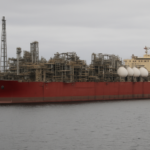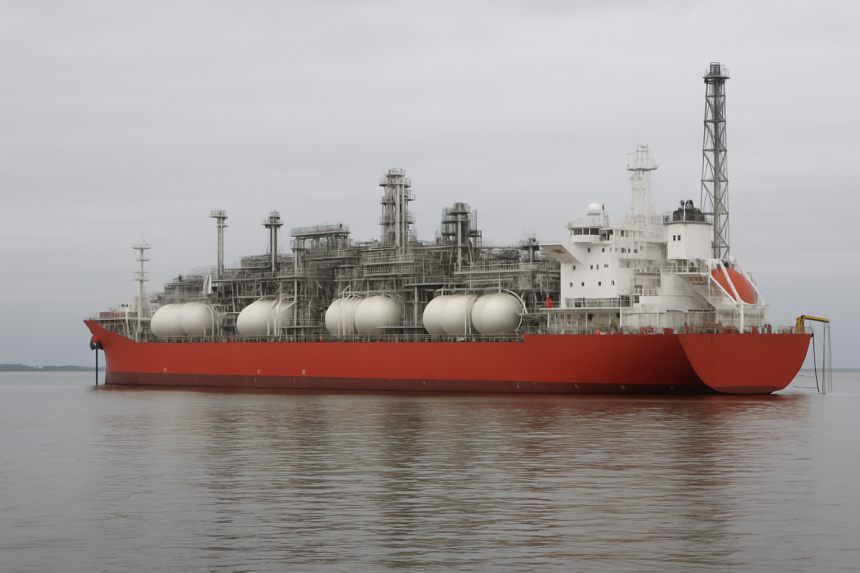
Delfin Midstream has announced a significant step forward in the development of America’s first floating liquefied natural gas (FLNG) export facility, achieving a final investment decision (FID) for the Delfin FLNG 1 vessel, located off the coast of Louisiana.
This landmark decision unlocks approximately $5 billion for the project’s initial phase and positions Delfin FLNG 1 to serve as the largest floating LNG development globally, with an export capacity of 4.4 million tonnes per year.
Investment and Partnerships
The FID was supported by a consortium led by Global Infrastructure Partners (GIP), part of BlackRock, alongside existing stakeholders including Mitsui O.S.K. Lines (MOL), Vitol, and Diameter Capital Partners. Delfin CEO Dudley Poston emphasized the significance of this project for enhancing global energy security and supporting U.S. energy exports.

“Securing FID for our first FLNG vessel is a groundbreaking milestone not only for Delfin, but also for global energy security,” Poston stated, highlighting the project’s role in advancing American energy and maritime dominance.
Project Timeline and Infrastructure
The project has been over a decade in the making. In March 2025, the U.S. Maritime Administration granted a deepwater port license, marking history as the first offshore LNG export terminal approved in the U.S.
Strategically located roughly 40 miles offshore Louisiana, Delfin’s approach utilizes floating liquefaction vessels connected to existing offshore pipeline infrastructure, minimizing the need for extensive onshore construction.
The project is further supported by long-term LNG sales agreements with major energy companies such as Vitol, Expand Energy, Centrica, and Gunvor, securing the economic viability of the facility.
Construction and Future Developments
Construction has commenced, with contracts awarded to reputable firms including Samsung Heavy Industries and Black & Veatch. MOL President and CEO Jotaro Tamura stated the company aims to leverage its offshore expertise to ensure the project’s success. Vitol’s Americas chief executive Ben Marshall described the investment as a means to deliver reliable and cost-competitive American energy to global markets.
With production expected to commence in 2030, Delfin also plans to advance the development of additional floating liquefaction vessels, enhancing its capacity to contribute to the global LNG market.
Behind the Headline
This development marks a significant evolution in the U.S. LNG export landscape, transitioning from traditional shore-based terminals to innovative offshore solutions. The use of FLNG facilities promises to lessen infrastructure and construction demands while augmenting export capabilities directly connected to infrastructure. As the international demand for LNG continues to rise, the successful commissioning of Delfin FLNG 1 will position the U.S. as a critical player in the offshore energy sector. Stakeholders will closely watch the project’s progress, especially relating to the execution of construction timelines and the operational readiness of subsequent vessels planned for deployment.