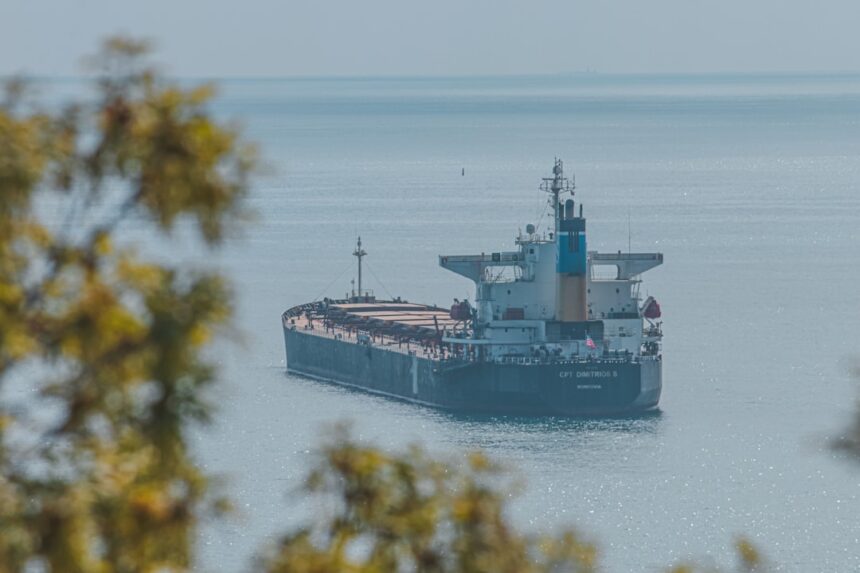
The capesize market continues to experience a remarkable upturn, with vessel earnings nearing $50,000 per day. This surge points to strong demand for iron ore, a primary commodity for dry bulk shipping, despite growing apprehensions about the health of the Chinese steel industry.
The Market Dynamics
Currently, capesize vessels are benefiting from buoyant freight rates, powered largely by iron ore shipments. Higher demand for iron ore is typically correlated with robust steel production levels in China, the world’s largest steel producer. However, analysts are beginning to voice concerns regarding recent trends in Chinese steel output, raising questions about the sustainability of the capesize market.

Impact of Steel Demand
The capesize sector’s strength has historically hinged on consistent iron ore flows from Brazil and Australia to China. Nevertheless, fluctuations in China’s manufacturing output have begun to impact the iron ore trade. Reports indicate that the Chinese steel industry is facing challenges that could reduce overall demand for iron ore, subsequently affecting freight rates for capesize vessels.

Future Outlook
As shipping analysts scrutinize these dynamics, the potential for a downturn in steel production could lead to a significant recalibration of the capesize market. Operators must remain vigilant, monitoring changes in steel demand while considering long-term implications for their operations. The interplay between iron ore shipping and steel manufacturing will be crucial in determining the trajectory of the capesize market in the coming months.
Behind the Headline
The current capesize market situation illustrates a classic instance where freight rates are buoyant, yet underlying economic fundamentals are weakening. Operators must navigate this paradox with caution, as reliance on iron ore flows can be unpredictable amid shifts in commodity demand. Attention should be focused on China’s economic indicators as any contraction in steel production may trigger a ripple effect through iron ore shipping, impacting charter rates and operational strategies in the dry bulk sector.