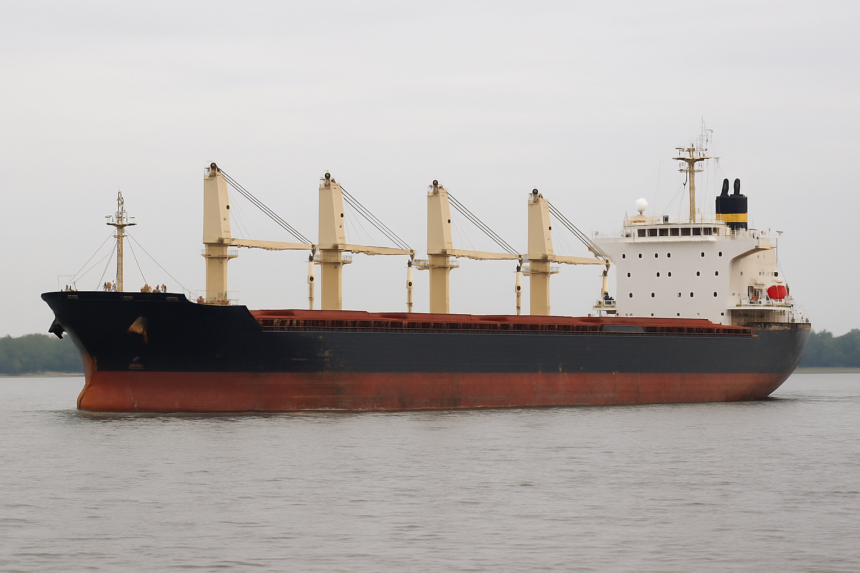
The Atlantic Panamax shipping market has shown remarkable resilience in the second quarter of 2026, recording substantial gains spurred by increasing demand for grain exports from East Coast South America (ECSA) to the Far East. According to data from S&P Global, the Platts KMAX9 Index—a benchmark tracking nine major Panamax routes—averaged $18,933 per day, marking a notable increase of 65% over the $11,513 per day reported in the same quarter of 2025.
Market Drivers
The high demand for shipments of grains to Asia has catalyzed the tightening of the Atlantic Panamax market. Shares of increased fronthaul pricing reflect this scenario, particularly on the Santos-Qingdao route, where the average freight rate for 66,000 metric tons is assessed at $50.18 per metric ton—an impressive 40% rise from the average of $36 per metric ton seen in Q2 2025.
A shipbroker based in London indicated that the surge in demand was primarily driven by stronger export activity in both grains and minerals, marking a departure from the previous year’s sentiment-driven market, where low Forward Freight Agreement (FFA) levels deterred charterers from committing to higher rates. The second quarter of 2026 saw the market return to fundamentals, with major grain traders actively dispatching cargoes in a significantly busier fixing environment.

Volume and Competition
Increased cargo demand led to ECSA becoming a key contributor to Panamax shipping activity, with shipments to the Far East reaching 454 in Q2 2026, up from just 194 in Q1 2026. The primary destination for these exports remains China, a notable and consistent buyer throughout the year.
Operators may find themselves facing competitive conditions, particularly for those able to offer vessels with prompt loading dates. Market dynamics shifted significantly as the supply of Panamax tonnage tightened, especially for vessels in proximity to favored loading zones. Shipbrokers noted that while the Pacific market remained robust during May and early June, fewer vessels were making the journey back to ECSA, as owners preferred lucrative Australian and Pacific routes.
Despite ongoing geopolitical tensions, chiefly regarding US-Iran discussions, the freight market experienced some correction by mid-June, as lower bunkering costs in various ports alleviated overall voyage expenses. However, there continues to be limited trade activity involving Panamax vessels destined for the Persian Gulf.
The Operational Read
The uptick in Panamax rates driven by increased grain shipments from South America signifies a return to a demand-focused market. Operators and charterers must be vigilant of the evolving landscape, as fluctuations in freight rates can drastically impact profitability. With competition heightened for prompt vessel availability, securing timely loading will be essential in optimizing trade routes. Monitoring geopolitical developments remains crucial, though their direct effect on market operations appears modest for now. Upcoming quarters will likely reflect how ongoing demand trends influence rate resilience and market positioning.