The SS United States, a famed ocean liner that held the transatlantic speed record, has completed its controlled sinking off Florida’s Gulf Coast. The vessel went under on November 11 at approximately 9 p.m. local time, concluding a remarkable 74-year operational journey. The ship was submerged roughly 22 nautical miles southwest of Destin-Fort Walton Beach, transitioning into what officials anticipate will be the world’s largest artificial reef.
The Sinking Operation
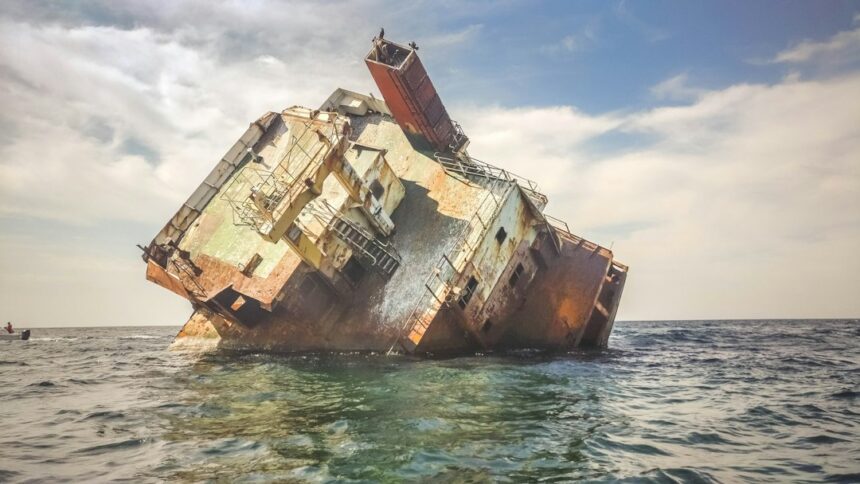
The sinking operation took nearly eight hours, significantly longer than initially projected. The intention was to achieve a controlled descent through the flooding of the vessel; however, the SS United States resisted submerging, remaining afloat longer than expected. The ship eventually sank stern-first, raising questions about whether it settled evenly on the seabed. Initial inspections to confirm its final position were scheduled for the following day.
The operation was overseen by Coleen Marine, a specialized contractor in end-of-life vessel services. Extensive preparations were made, involving the removal of hundreds of portholes and cutting openings to enable seawater to enter the vessel’s hull. This carefully structured approach aimed to manage the sinking process, though the considerable size of the ship and its internal complexity introduced challenges.

Legacy of the SS United States
The SS United States was an engineering marvel, designed by renowned naval architect William Francis Gibbs. Launched in 1952 by Newport News Shipbuilding, the ship was celebrated for its speed, achieving a remarkable 240,000 shaft horsepower through steam turbines. The vessel, measuring 990 feet in length, shaped the legacy of American passenger shipping and was considered one of the last great symbols of the nation’s maritime golden age.
The last descent of the SS United States is a bittersweet event, particularly for maritime enthusiasts and former crew members, marking the end of a significant chapter in history. Built to compete with Europe’s finest, its legacy will now serve an ecological purpose as an artificial reef, enriching marine life in the region.
The Operational Read
The careful execution of the SS United States’ controlled sinking reflects a broader trend in maritime operations focusing on environmental responsibility. The choice to submerge an iconic vessel as an artificial reef highlights a strategic shift within the shipping industry toward sustainable practices. For operators and teams involved in such projects, the critical takeaway is the need for detailed contingency planning and adaptive strategies to manage similar large-scale operations. Moreover, this event emphasizes the dual role of decommissioned vessels, not only as historical artifacts but as contributors to marine ecosystems. Future efforts will likely continue to explore such innovative repurposing methods, particularly for large ships like the SS United States.