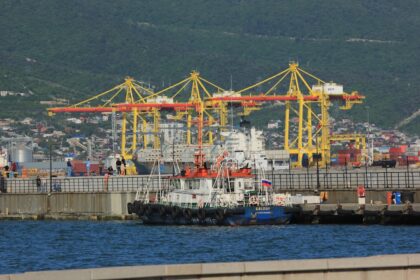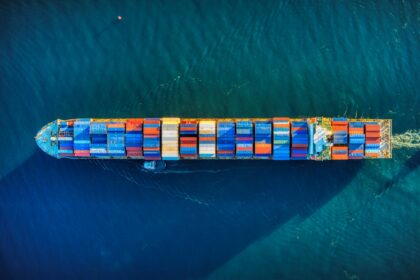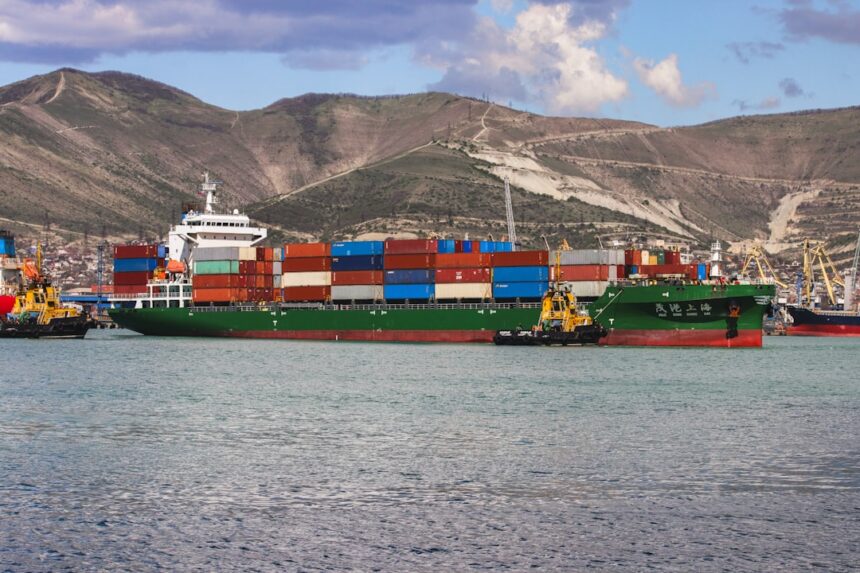
Significant port congestion in several regions is disrupting global container trade, as highlighted by A.P. Moller-Maersk’s recent statements regarding long-term underinvestment in port infrastructure. Drewry’s latest analysis indicates a troubling rise in vessel waiting times and declines in schedule reliability across major shipping lines.
Current Congestion Trends
Drewry’s new publication, “Market Signals – Container Shipping,” notes a clear deterioration in key performance metrics, including global average waiting times for vessels. According to Drewry’s Ports and Terminals Insight, ships waiting to enter ports experienced an average delay of 3.6 days during week 32 of early August, significantly impacted by typhoon activity in China. This situation reflects a broader trend, with global average ship waiting times nearly doubling from the first seven months of 2019 to the same period in 2023.
Data reveal that while both vessel waiting times and total port call durations have increased, a growing portion of time in port is spent awaiting a berth rather than being handled. The 31% increase in average port time for containerships since 2019 underscores this issue, exposing a troubling drop in productivity. Regional discrepancies further emphasize that operational challenges are not uniform.


Impact on Industry Operations
Maersk’s CEO, Vincent Clerc, delineated the scope of these issues in a financial presentation on 13 August, pinpointing insufficient container port capacity as a primary factor behind escalating congestion in Europe, the East Coast of South America, West Africa, and the Middle East. Clerc attributed this situation to strong export growth from Asia, rising notably after a prolonged period of limited investment in terminal capacity post-financial crisis.
Drewry’s analysis asserts that the rising risk of congestion is linked to multiple industry dynamics, many of which lie beyond the control of port operators. Notably, terminals operating at 90% berth utilization face lengthy recovery times after disruptions—sometimes taking up to a week—whereas those at 75% utilization can recover in as little as two days. These operational metrics can significantly affect competitiveness and capital returns for terminal operators.
Strategic Industry Responses
Moreover, carrier strategies that prioritize cost minimization—such as blank and ad hoc sailings, along with extra loaders—have contributed to peaking factors at major ports, thereby aggravating yard congestion and waiting times for vessels. Drewry’s extensive analysis of port utilization and throughput demonstrates that, between 2019 and 2026, terminal operators expanded capacity by an average of only 21%, lagging behind a 28% increase in shipping volumes. Notably, while Singapore has managed to expand port capacity in tandem with volume, other critical ports, such as Shanghai, Santos, Jawaharlal Nehru Port, and Qingdao, have fallen behind.
Behind the Headline
As port congestion continues to escalate, it highlights systemic issues within the global shipping industry and the urgent need for investment in infrastructure. Operators are now tasked with navigating increasing delays and uncertainties while striving to maintain operational efficiency. The trend emphasizes the necessity for better integration of supply chain resilience within carrier strategies to mitigate the impacts of congestion. Key industry stakeholders should focus on innovative solutions and investments to enhance capacity and expedite recovery from disruptions to safeguard future trade flows.