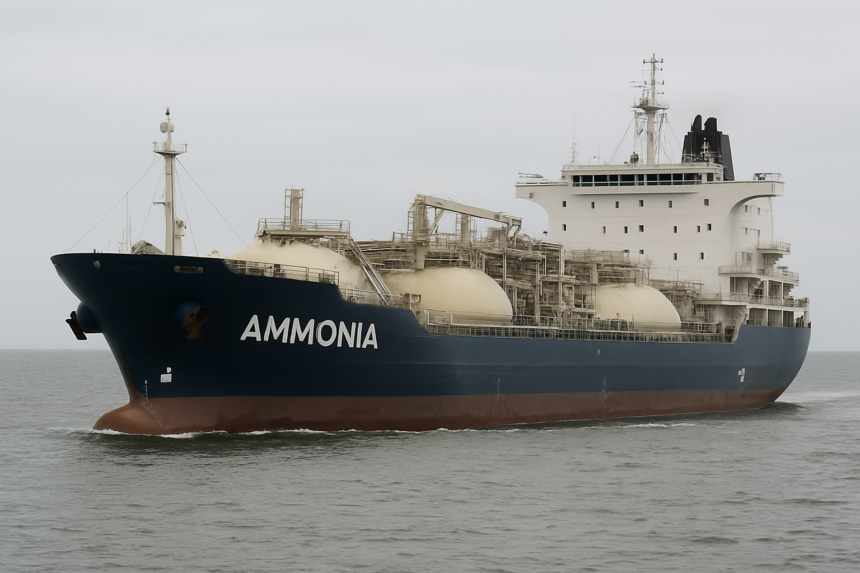
Mitsui O.S.K. Lines, Ltd. (MOL) has announced the signing of a long-term time charter agreement with JERA Co., Inc. for two very large gas carriers (VLGCs) designated to transport low-carbon ammonia. This operation is vital to establishing Japan’s first large-scale ammonia transport system, marking a significant advancement in meeting the country’s energy transition goals.
The Partnership and Contract Details
The charter is designed to enable the transportation of low-carbon ammonia produced in the Blue Point Project located in Louisiana, United States, to JERA’s Hekinan Thermal Power Station in Aichi Prefecture. The initiative is expected to commence around fiscal year 2029. This contract, which follows ongoing discussions between MOL and JERA that began in November 2022, was formalized based on a Memorandum of Understanding (MOU) executed in 2025.
Significance of Low-Carbon Ammonia
Low-carbon ammonia has emerged as a critical element in Japan’s energy landscape, serving multiple purposes including power generation and marine fuel applications. As a next-generation clean energy source, ammonia does not emit CO2 at the point of combustion, which could significantly reduce overall greenhouse gas emissions. Additionally, ammonia holds promise as a hydrogen carrier, further enhancing its role in global energy solutions.


MOL’s Environmental Strategy
This agreement aligns with MOL’s holistic environmental strategy, encapsulated in the “BLUE ACTION 2035” management plan, aimed at achieving net-zero greenhouse gas emissions by 2050. By focusing on high-quality and safe transport of ammonia and actively participating in developing the low-carbon ammonia value chain, MOL is strategically positioning itself in the evolving energy market with a commitment to sustainable practices.
Why It Matters
The strategic partnership between MOL and JERA signifies a crucial step in establishing a sustainable marine transport system for low-carbon ammonia. As shipping operations gradually shift towards greener alternatives, the growing demand for ammonia as an energy carrier could reshape fuel bunkering practices in the maritime industry. Operators must closely monitor regulatory developments and technological advancements in ammonia transport and storage to effectively align with the industry’s decarbonization objectives and capitalize on emerging opportunities in this evolving market.