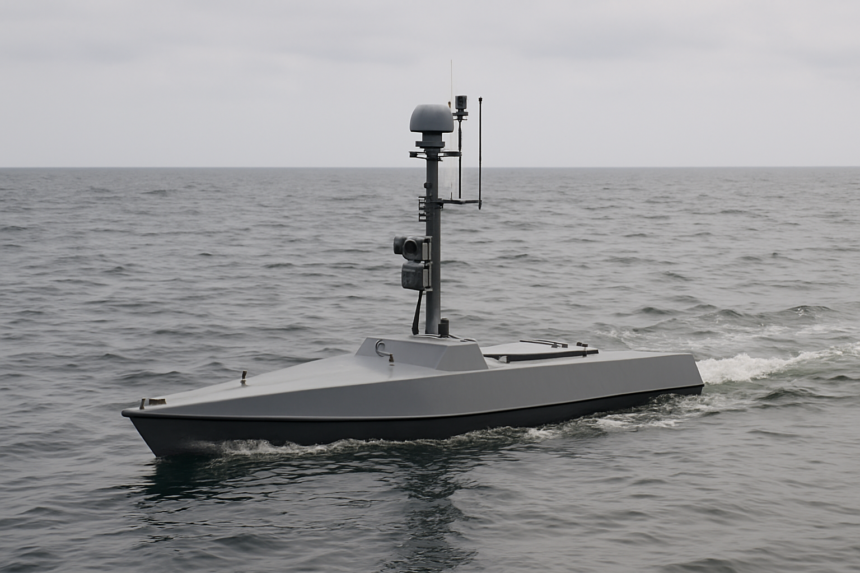
In a strategic move to bolster coastal defenses against Russian drone incursions in the Black Sea, Ukraine is leveraging cutting-edge technology from a consortium of startups. Among these, BlueShadow, founded by former U.S. submarine commander Charles Maher, is at the forefront, developing autonomous naval vessel swarms aimed at altering the dynamic of maritime security off Ukraine’s coast.
The Project Overview
BlueShadow’s initiative involves deploying four squadrons of 12 autonomous vessels, which are designed to establish a protective barrier approximately 10 to 12 kilometers offshore from Odesa, Ukraine’s port city. Maher indicated that the first squadron could be operational by early 2027, equipped with missiles and interceptor drones to enhance interception capabilities against hostile aerial threats.
Innovation Ecosystem
This initiative is part of a broader movement involving eight startups, which demonstrated their technological offerings to Ukraine’s military. The push is facilitated by Defence Builder, a private-sector accelerator that has made funding and mentorship accessible to emerging defense technology firms. According to Defence Builder CEO Line Rindvig, their program, which includes an initial investment of $10,000 and a four-month acceleration period, aims to establish a robust operational foundation for startups while introducing low-cost innovations to military applications.

Investment Surge and Market Access
Investment in Ukraine’s defense sector has seen exponential growth, rising from just $1.1 million in 2023 to $105 million last year, reflecting an urgent response to the ongoing conflict. Companies involved are now able to supply equipment directly to military units through platforms like Brave1 Market and DOT-Chain, functioning as an online marketplace for defense products, which includes feedback mechanisms akin to e-commerce platforms.
Furthermore, remote-controlled ground vehicles have become a focal point of development to minimize the risk to personnel in the so-called ‘Kill Zone’ near the front line. Innovations from companies such as Telearmy have led to the adaptation of various vehicles for remote operation, significantly changing engagement strategies. This technology empowers military units to conduct operations from a distance, bypassing the perilous front line where traditional methods have become increasingly hazardous.
The Operational Read
The incorporation of autonomous naval and terrestrial drones represents a pivotal shift in Ukraine’s military capabilities. For operators and military planners, this technology not only optimizes defense but also mitigates the vulnerabilities associated with personnel deployment in high-risk zones. With the first naval squadron projected to launch by 2027, key observations will center on inter-operational effectiveness with existing military assets and the impact on tactical operations in maritime environments. Stakeholders will need to monitor advancements in drone capabilities and their integration within Ukraine’s broader defense strategy against more resource-intensive adversaries.