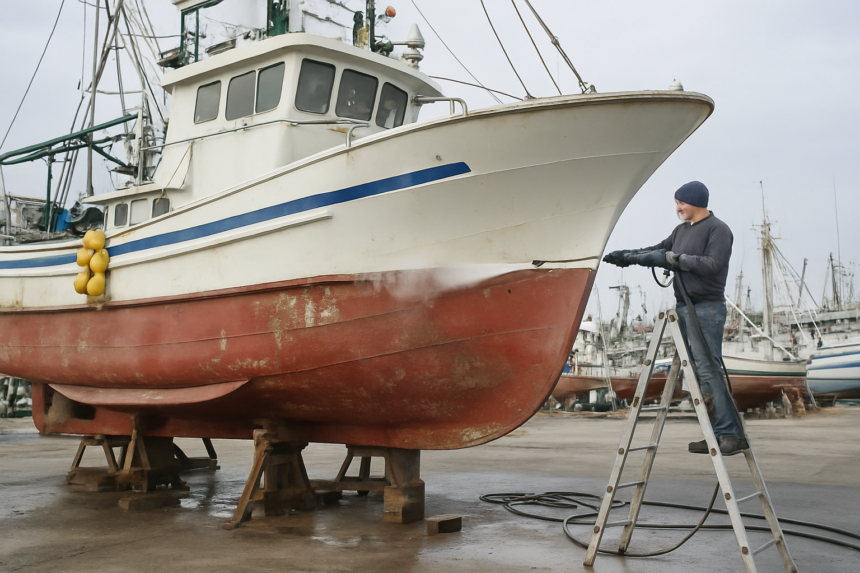
A maintenance operation aboard the fishing vessel Antarctic Discovery escalated into a toxic gas emergency when decomposing fish waste was accidentally discharged into a machinery space, leading to the hospitalization of four crew members. The incident occurred on February 21, 2025, while the vessel was undergoing routine maintenance in dry dock at Lyttelton.
The Incident
According to a report by New Zealand’s Transport Accident Investigation Commission (TAIC), two apprentice fitters inadvertently activated a pump that discharged a mixture of decaying fish offal and seawater from a holding tank. This unexpected release occurred in the bow thruster’s machinery space, where the workers were performing piping repairs. The pump expelled the waste through an open hose positioned dangerously above the access ladder, exposing the apprentices to the hazardous material and rapidly releasing hydrogen sulphide, a highly toxic gas associated with decomposing organic matter.
The apprentices managed to escape the dangerous environment, but the vessel’s superintendent, upon entry to investigate the situation, was overcome by the gas. Shortly thereafter, both the chief engineer and second engineer entered the compartment and subsequently collapsed, requiring rescue by crew members equipped with breathing apparatus.

Investigation Findings
The TAIC report indicated that the accidental activation of the pump was the critical trigger for the incident, although it revealed broader safety deficiencies. Notably, nearby machinery capable of causing hazards was not isolated prior to maintenance activities, and the confined nature of the bow thruster’s machinery space, due to the potential for hazardous atmospheres, was not appropriately classified. This classification would have mandated more stringent safety protocols.
The investigation pointed out failures in coordination between various contractors working on the vessel during dry dock operations, emphasizing the necessity for clear communication and shared safety management responsibilities. There were also concerning gaps in the documentation and approval processes for safety-critical modifications to the vessel.
TAIC’s Acting Chief Investigator, Tahlia Fisher, stressed that these findings indicate systemic safety shortcomings that affect not just the maritime industry, but other sectors as well. In response to the incident, vessel owner Australian Longline Pty. Ltd. has already initiated corrective actions to enhance safety protocols.
Impact on Maritime Safety Protocols
In light of these findings, TAIC has issued safety recommendations directed not only at Australian Longline but also at Lyttelton Port Company, aimed at bolstering safety management practices and diligence in dry dock procedures. These recommendations include reassessing protocols for managing hazardous atmospheres and ensuring that potential risks are addressed prior to undertaking maintenance work.
The Operational Read
This incident highlights critical challenges in safety management aboard fishing vessels, particularly during maintenance operations. The exposure to hydrogen sulphide serves as a stark reminder of the dangers present in confined spaces, where decomposing organic matter can rapidly create life-threatening environments. Operators are urged to implement robust hazard identification and risk assessment processes, with a focus on preventing similar incidents through rigorous safety training and cooperation between all parties involved in maintenance activities. Moving forward, close attention should be paid to recommendations from safety investigations to foster a culture of compliance and proactive risk management in the maritime industry.