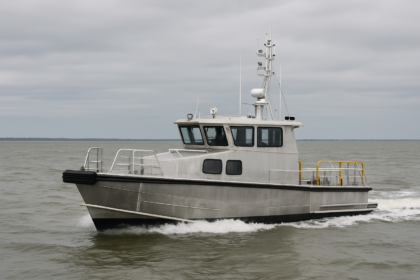
Master Boat Builders has secured its first contract as a prime shipyard for the U.S. Navy, winning an agreement to build three new Landing Craft Utility (LCU) vessels at its facility in Coden, Alabama. This contract marks a significant milestone for the shipyard and will include an option for a fourth vessel, with work expected to continue through 2029. The value of the contract has not been disclosed.
Strategic Shift in Production
This award positions Master Boat Builders deeper into Navy construction, aligning with the service’s strategy to increase production capacity by utilizing more U.S. shipyards. Garrett Rice, president of Master Boat Builders, expressed pride in the company’s skilled workforce over the past 45 years and emphasized the honor of being trusted by the Navy. Rice stated, “We will continue investing in our people, capabilities, and Gulf Coast operations to provide the quality and performance our warfighters depend on.”
This award marks the shipyard’s initial foray into defense shipbuilding contracts as the prime yard. Previously, Master Boat Builders collaborated with Austal USA under a distributed shipbuilding arrangement to support the Navy’s Navajo-class Towing, Salvage and Rescue Ship (T-ATS) program. This partnership and the new LCU contract exemplify the Navy’s commitment to distributing construction tasks across smaller regional shipyards, enhancing overall production efficiency.

Importance of LCUs
Landing Craft Utility vessels play an essential role for the Navy and Marine Corps by transporting heavy equipment, vehicles, supplies, and personnel between amphibious ships and shore facilities. The new LCU 1700 class is designed to replace the retiring LCU 1610 fleet, with vessels measuring approximately 139 feet in length and capable of carrying up to 170 short tons of cargo, including tanks and other heavy military items. They feature a bow ramp and stern gate facilitating vehicle and cargo movement during loading and unloading operations.
The Navy has specified a range of about 1,200 nautical miles at a speed of 8 knots for the LCUs, allowing them to operate independently as well as support amphibious operations. This capability is crucial for maintaining an effective amphibious assault force.
Behind the Headline
The successful securing of this contract represents more than just a win for Master Boat Builders; it marks a pivotal shift in U.S. Navy shipbuilding strategy towards leveraging regional capabilities to alleviate production bottlenecks at larger yards. This approach not only increases the number of facilities capable of meeting Navy standards but also fosters workforce development initiatives to combat labor shortages in maritime trades. As the Navy seeks to modernize its amphibious fleet, the new LCUs are a critical component, enhancing operational readiness and logistical flexibility. Operators and stakeholders will closely monitor construction timelines and workforce advancements in the coming years.