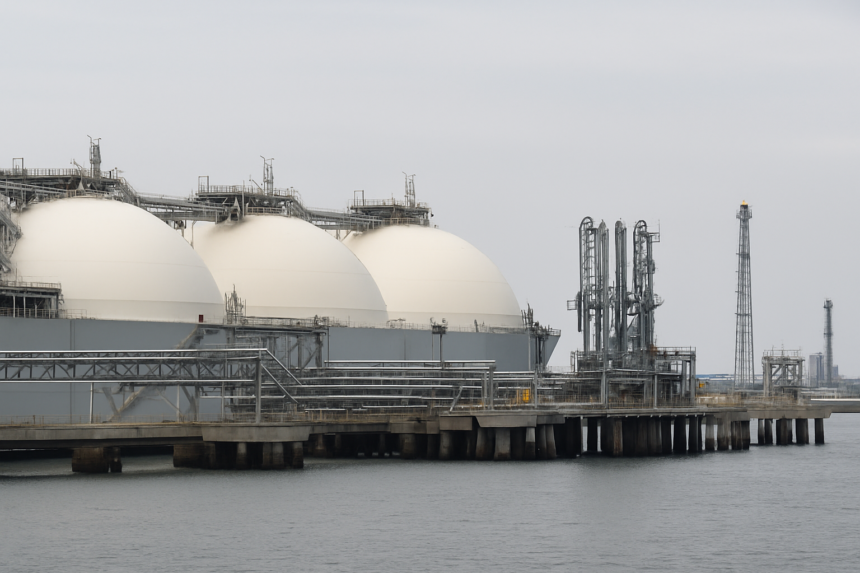
As liquefied natural gas (LNG) prices surge in the wake of the U.S.–Iran conflict, Korea Gas Corporation (KOGAS) faces a daunting financial landscape, with accounts receivable exceeding 13 trillion won. South Korea’s Ministry of Climate, Energy and Environment has indicated potential measures to manage LNG pricing, aimed at mitigating the impact of rising fuel costs on electricity rates.

Government Measures Under Review
During a recent press briefing, Minister Kim Seong-hwan highlighted the government’s commitment to preventing substantial electricity bill increases reminiscent of those seen during the Russia–Ukraine war. Elevated LNG costs, particularly due to geopolitical factors, have prompted discussions about implementing a cap on wholesale LNG prices, which would directly influence system marginal prices (SMP).
The system marginal price establishes a baseline for determining electricity costs in the domestic market, correlating closely with the price of LNG. If the government caps wholesale prices, it may help curtail the extent of electricity rate increases; however, this could also raise KOGAS’s existing accounts receivable further, as the corporation would be required to supply gas at reduced domestic prices that do not reflect import costs.

Financial Implications for KOGAS
KOGAS has expressed concerns that capping LNG prices could exacerbate its financial challenges. The corporation’s accounts receivable, stemming from selling LNG below market value, reached 13.3717 trillion won by the end of March. Although these receivables are not recognized as immediate losses, they represent a significant financial burden that will ultimately need to be addressed through future rate increases.
The company has advocated for normalizing gas rates based on a fuel cost adjustment system, which is currently limited to commercial and city gas rates. KOGAS President Choi Yeon-hye underscored that unpaid gas bills are expenses that the public will inevitably shoulder. A balancing act is necessary: while the government aims to keep energy prices stable to control inflation, utility providers like KOGAS face unsustainable financial pressure when constrained by price ceilings.
The Operational Read
This situation presents multifaceted challenges for KOGAS and the broader energy sector in South Korea. While a cap on wholesale LNG prices may offer immediate relief to consumers, it risks leading to a larger financial shortfall for KOGAS, impacting its ability to invest in infrastructure and manage supply effectively. Operators will need to monitor international LNG market dynamics closely, as fluctuations could trigger further government interventions. The ongoing tension in the Middle East adds a layer of unpredictability to LNG supply chains, amplifying the urgency for a long-term strategy that balances consumer protection with utility viability.