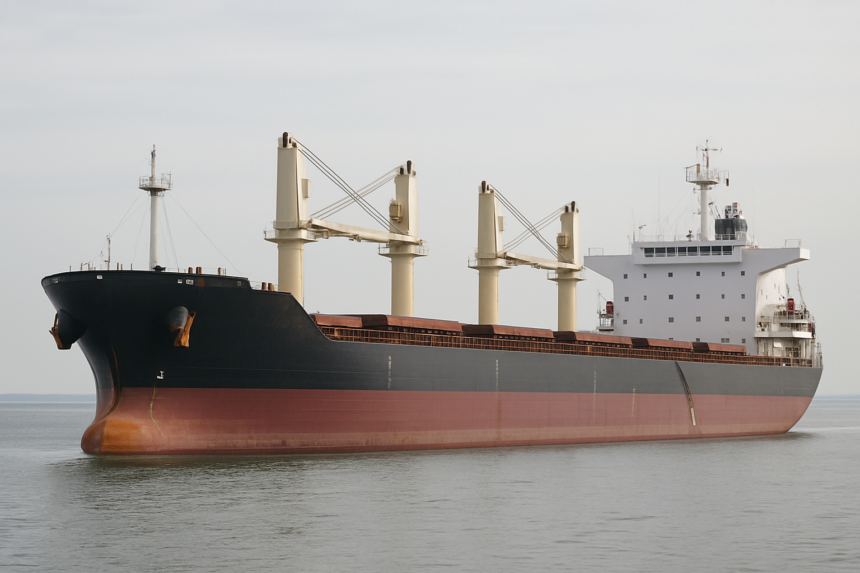
The Baltic Dry Index (BDI) has entered its eighth consecutive day of decline, dropping 3.4% to settle at 2,818 points on Tuesday. This marks the index’s lowest level since May 1, 2026, primarily impacted by sustained weakness in larger vessel segments, particularly the capesize and panamax categories.

Market Dynamics
The capesize index, which is critical for transporting heavy commodities such as iron ore and coal, fell by 5.9% to 4,441 points. This significant decrease underscores the ongoing challenges faced by the segment, with reduced demand and an oversupply of vessels contributing to downward pressure on freight rates. In addition, the panamax index, designed to track vessels carrying between 60,000 and 70,000 tons of coal or grain, experienced a modest decline of 0.6%, dropping to 2,205 points. The dual pressures of increasing vessel availability and fluctuating demand are central to the current conditions affecting these larger vessel operations.
Conversely, the supramax index managed to gain ground, increasing by 1.1% and reaching 1,614 points. This rise in the supramax segment, which generally handles smaller cargoes, suggests a potential shift in demand dynamics, as operators may be pivoting to vessels capable of serving various niche markets more effectively.


Implications for Operators
The ongoing downturn in the Baltic Dry Index holds significant implications for dry bulk freight operators. With capesize and panamax vessel rates declining, operators may face challenges in covering operational costs and achieving profitable margins. The ability to navigate these constraints will depend on strategic decision-making, including potential adjustments in fleet deployment and chartering strategies. Operators are likely to monitor market signals closely, including fluctuations in commodity demand and trends in global trade that can impact logistics chains.
Behind the Headline
The sustained decline in the Baltic Dry Index emphasizes the interconnected nature of dry bulk shipping markets and the challenges posed by changing demand patterns. For operators, managing laytime and potential demurrage costs becomes increasingly critical as vessel utilization rates may decline amid these conditions. Future monitoring of the supramax index’s performance may reveal shifts in trade patterns as operators respond to current market pressures. The overall freight landscape remains volatile, suggesting that stakeholders must remain adaptable and alert as they navigate these changing dynamics.