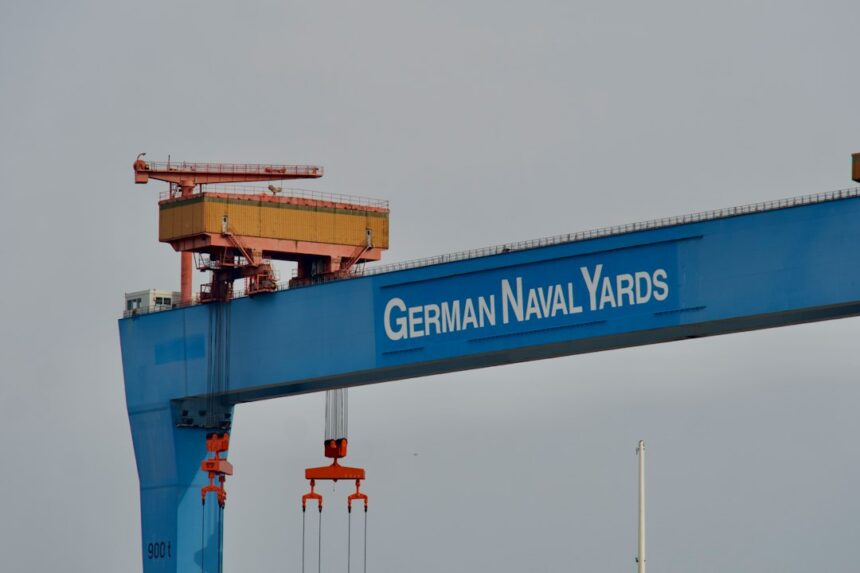
On Wednesday, Hanwha’s drive to expand its role in U.S. naval shipbuilding was evident as Acting Secretary of the Navy Hung Cao toured the company’s Philadelphia Shipyard and engaged with executives regarding plans to enhance domestic shipbuilding capabilities. The visit was part of a broader strategy by Hanwha to bolster the U.S. defense sector and reinforce military maritime readiness.
Strategic Investments and Workforce Growth
During the visit, Cao highlighted the importance of U.S. maritime strength, emphasizing that effective shipbuilding must meet national demands in terms of speed and scale. Hanwha acquired the former Philly Shipyard in late 2024 and has since made significant investments aimed at transforming it into a key player in the U.S. naval sector. Michael Coulter, CEO of Hanwha Defense USA, stated that the company is committed to revitalizing the Philadelphia Navy Yard’s historical legacy in naval construction.
The workforce at Hanwha Philly Shipyard has expanded significantly, with employee numbers more than doubling to nearly 2,500 as of 2024. This increase accompanies substantial investments in training programs and production capacity enhancements, signaling Hanwha’s commitment to not only meet commercial demands but also support the U.S. Navy’s objectives.

Current Projects and Future Ambitions
Currently, the shipyard is engaged in completing the Maritime Administration’s National Security Multi-Mission Vessel program, with four of the five vessels already delivered. The lead vessel, Empire State, has been activated for a federal mission supporting U.S. Navy operations in the Indo-Pacific region. With a commercial backlog extending through at least 2029, Hanwha has cemented orders that include three LNG-powered containerships for Matson, two LNG carriers for Hanwha Shipping, and multiple firm orders for MR tankers.
In addition to commercial shipbuilding, Hanwha has secured contracts for more complex projects, such as the advanced Missile Range Instrumentation Vessels, which includes the future Golden Defender. This endeavor is part of the Trump administration’s broader missile defense initiative and underscores the strategic integration of advanced technologies into U.S. maritime capabilities.
Regulatory Landscape and Future Prospects
Hanwha’s ambitions also extend to acquisitions within the U.S. shipbuilding landscape, as evidenced by its preliminary offer of up to $1.2 billion for Austal USA. This potential acquisition would further balance its portfolio in naval shipbuilding and enhance its capacity to meet Navy and Coast Guard requirements.
The recent presidential memorandum aimed at increasing U.S. naval shipbuilding capacity establishes a framework for foreign companies to initially build vessels overseas, with later shifts to domestic facilities, contingent on investment and workforce training. Hanwha’s progress in Philadelphia aligns with these initiatives and signals a significant influx of foreign expertise into the U.S. maritime industrial base.
Behind the Headline
The push for enhanced U.S. naval shipbuilding capacity reflects operational imperatives for both military readiness and industrial sustainability. For shipbuilders like Hanwha, substantial investments translate into job creation and skill development, reinforcing local economies while meeting national defense goals. The strategy of combining advanced foreign technology with domestic production underscores the shifting dynamics in global maritime industry practices. Moving forward, operators must closely monitor Hanwha’s developments and the implications of U.S. regulatory policies on foreign investments in naval shipbuilding, particularly as they relate to expanding Fleet capacity and technological advancements.