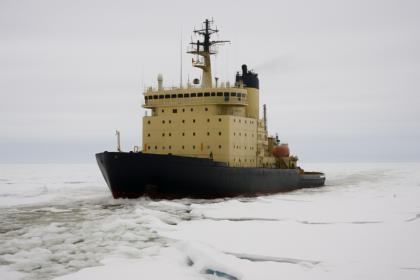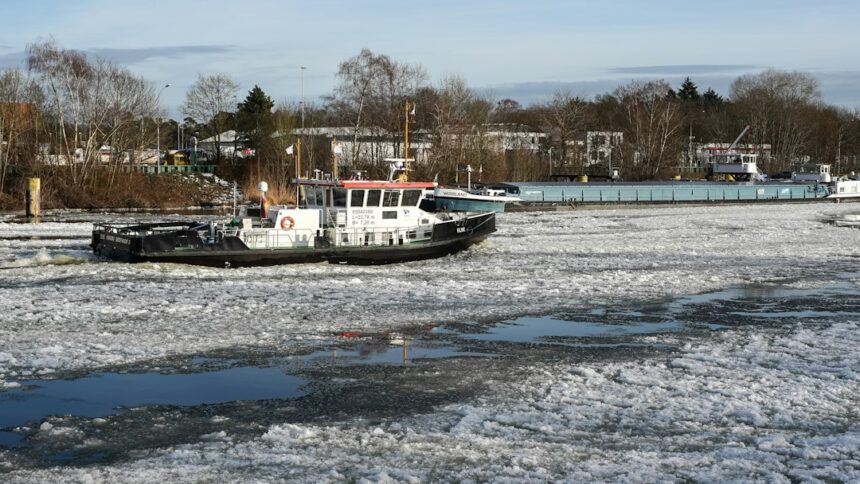
European leaders have endorsed Finland’s proposal for a unified icebreaker fleet to navigate the increasingly vital Arctic region. This initiative arises as Arctic shipping and military operations gain prominence, driven by factors such as climate change and geopolitical dynamics involving Russia and China.
The Proposal
During a recent summit, Finnish Prime Minister Petteri Orpo highlighted the need for a collaborative icebreaking capability, indicating that Finland could lead the development and hosting of this fleet. German Chancellor Friedrich Merz expressed strong support for this endeavor, arguing that the significance of the Arctic necessitates a collective response from the entire European Union rather than just Nordic countries.
“We definitely need icebreakers, and this is not just an issue for Finland, for Norway, for Sweden,” Merz stated. He noted the urgency presented by Russia’s military buildup in the region and called for a unified understanding and strategy regarding the evolving security landscape.

Strategic Importance
EU foreign policy chief Kaja Kallas underscored the connection between icebreaker capabilities and the shifting maritime environment, accentuating the need for vessels that can operate in challenging conditions. Though the summit did not yield an agreement on procurement specifics—such as the size, financing, or construction timeline—this dialogue signifies an important recognition of icebreakers as strategic assets.
Traditionally viewed solely as infrastructure to facilitate winter navigation and commercial shipping, icebreakers are now acknowledged for their broader roles, including military mobility, emergency response, search and rescue efforts, and as symbols of governmental presence in remote areas.
Global Context
Finland holds a leading position in icebreaker design and construction, backed by over a century of expertise. The U.S. is leveraging this knowledge in its Arctic Security Cutter program, with a significant portion of the vessels to be built in Finland. Concurrently, Canada is investing heavily in its icebreaking fleet, signaling the priority that Arctic operations hold in North America.
As commercial activity in the Arctic heightens—with Russia increasing oil and liquefied natural gas shipments through the Northern Sea Route and Chinese firms establishing more frequent shipping services—the establishment of a European icebreaking fleet represents not only an operational necessity but also a strategic avenue for the EU to maintain access and influence in Arctic waters.
Behind the Headline
This emerging push for a unified icebreaker fleet highlights the dual challenges of securing maritime routes while also addressing geopolitical tensions in the Arctic. For shipping operators, the implications of this initiative extend beyond ice management; they underscore the need for reliable access to Arctic routes amidst increasing commercial traffic. Observers should watch for developments on the EU’s Arctic strategy that could dictate the operational capabilities and readiness of this proposed fleet, along with the potential for collaborative efforts among member states facing similar challenges.