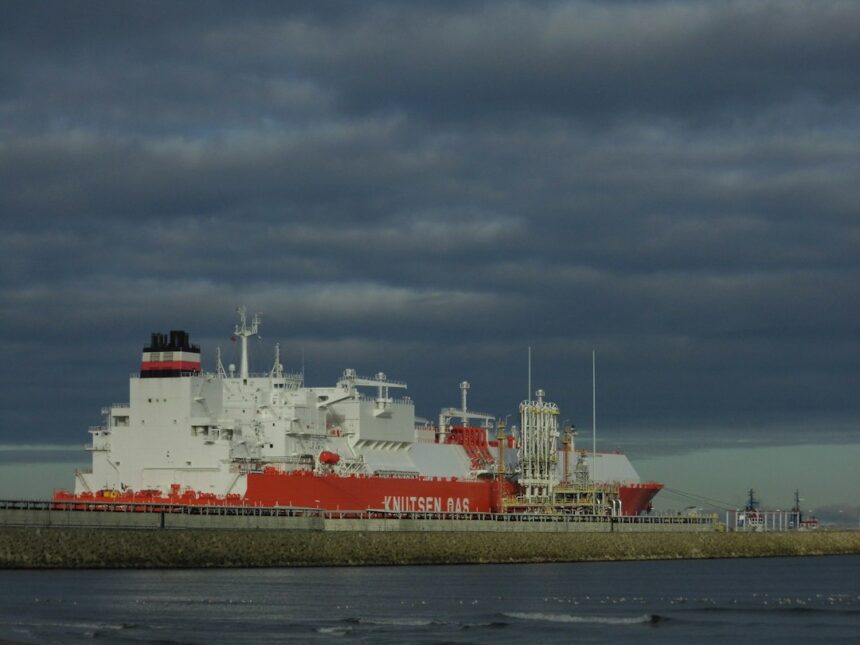
Lloyd’s Register (LR) has published an analysis suggesting that 200,000m³ LNG carriers could be a credible advancement for the global LNG fleet renewal effort. This finding highlights the potential for larger vessels to increase cargo capacity and decrease transportation costs while not necessitating significant alterations to existing terminal infrastructures.
Analysis Overview
The insights were presented in the LR Advisory terminal compatibility and commercial evaluation report for GTT during Gastech 2026. The report assessed large LNG carrier designs against existing infrastructure, revealing that 88 LNG terminals globally can support the operational demands of 200,000m³ vessels, compared to 97 terminals for traditional 174,000m³ ships.
Notably, the research indicates that key LNG trading centers across Asia Pacific, Europe, North America, and the Middle East are generally equipped to handle 200,000m³ LNG carrier operations. The compatibility of terminals is crucial for ensuring operational flexibility in LNG transportation.


Technical Findings
LR’s analysis indicates that cargo tank configuration—whether three-tank or four-tank—has minimal impact on terminal access. More critical factors include the vessel’s beam, draft, and displacement. This insight can alleviate concerns among operators regarding possible limitations imposed by terminal capabilities.
The current landscape of LNG shipping is under increasing pressure to enhance transport efficiency, and LR’s findings suggest that adopting larger vessels can effectively address this demand. By moving larger volumes per voyage, operators can reduce the number of required sailings for specific transport volumes, potentially aligning with forecasts for LNG trade growth.
Economic Advantages
The commercial evaluation included in LR’s report highlights economic benefits for both LNG carriers’ owners and charterers. Despite the limited reduction in terminal access, the increased cargo carrying capacity of 200,000m³ vessels presents advantages in transportation efficiency. LR’s modelling anticipates a potential owner benefit of approximately $85.5 million over 30 years, alongside shipping cost savings on key routes.
As the industry looks to balance transportation efficiency with aspirations for fleet renewal and ongoing operational flexibility, the adoption of larger LNG carriers seems poised to become a significant trend in LNG shipping.
Behind the Headline
The findings from Lloyd’s Register indicate a pivotal moment for the LNG shipping industry, where decisions about fleet renewal will influence operational dynamics for years. The compatibility of larger carriers with existing infrastructure mitigates potential obstacles to their implementation. This positions many operators to capitalize on enhanced efficiency and economies of scale without compromising access to major trading hubs. Moving forward, monitoring the adoption rates of these vessels and their impact on LNG trade scalability will be crucial for maritime stakeholders.