Update 23 Aug 2026, 22:35 UTC:
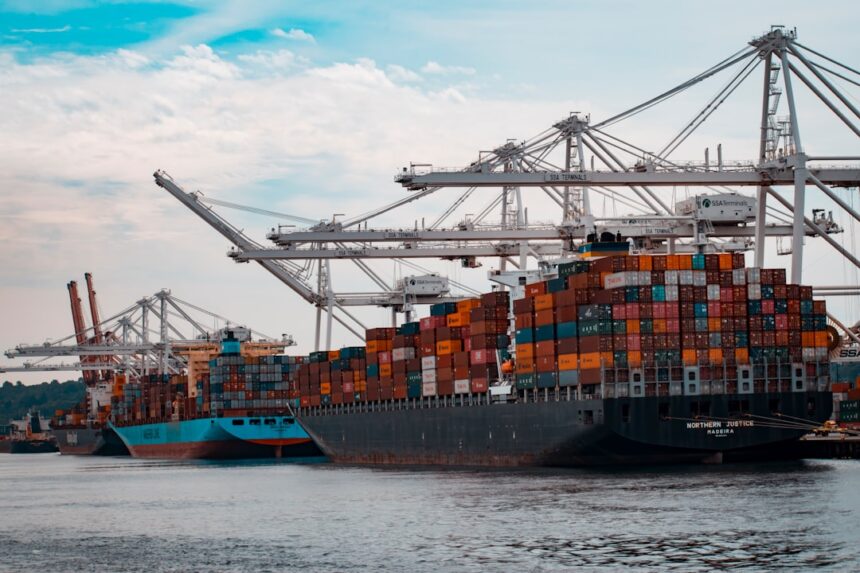
Container shipping rates from Asia to the United States have increased significantly in response to heightened demand and ongoing supply chain constraints. Currently, West Coast rates range from $6,000 to $7,400 per 40-foot equivalent unit (FEU), while East Coast rates sit between $8,000 and $10,500/FEU. This marks more than a fourfold increase in rates to the West Coast since the onset of the U.S.-Iran conflict.
Market Dynamics and Rate Increases
According to supply chain advisors Drewry, rates from Shanghai to Los Angeles and Shanghai to New York experienced a week-on-week rise of 9%. The firm reports that demand has remained robust on the transpacific trade lane, prompting carriers to strategically manage supply through blank sailings and capacity reductions. Notably, capacity on the Asia to U.S. East Coast route has declined by 9% in August compared to July, while the U.S. West Coast route saw a modest drop of 0.4%. This tightened capacity is expected to sustain freight rates in the coming week.

In light of recent market adjustments, several carriers have announced surcharges for transits through the Panama Canal on Asia to U.S. East Coast and Gulf Coast routes, effective September. This could exert additional upward pressure on already elevated shipping rates as operational costs rise.
Strategic Considerations for Shippers
Peter Sand, chief analyst at Xeneta, highlighted a noteworthy discrepancy between import costs to the two U.S. coasts. Importing goods to the East Coast is currently $3,334 per FEU more expensive than landing on the West Coast, a significant factor for shippers to consider. Before the onset of the Middle East crisis on February 28, the respective costs stood at $1,879/FEU to the West Coast and $2,651/FEU to the East Coast. The dramatic rise in costs emphasizes the need for shippers to evaluate their routing strategies carefully.
According to Judah Levine, head of research at Freightos, persistent peak season demand, along with increased bunker fuel prices and Panama Canal surcharges, are key contributors to rising rates. These factors necessitate a dynamic approach among supply chain professionals to manage resilience and freight spending amidst market fluctuations.
Behind the Headline
The upward trajectory of container shipping rates from Asia to the U.S. is indicative of ongoing stresses within global supply chains. As limited transits through the Panama Canal are set to complicate logistics further, the wide disparity in costs between U.S. coasts presents crucial decision-making opportunities for importers. Operators must weigh the benefits of lower freight charges against additional costs incurred via land transport when selecting shipping routes. Keeping a vigilant eye on market trends and remaining adaptable will be essential for navigating these evolving challenges.