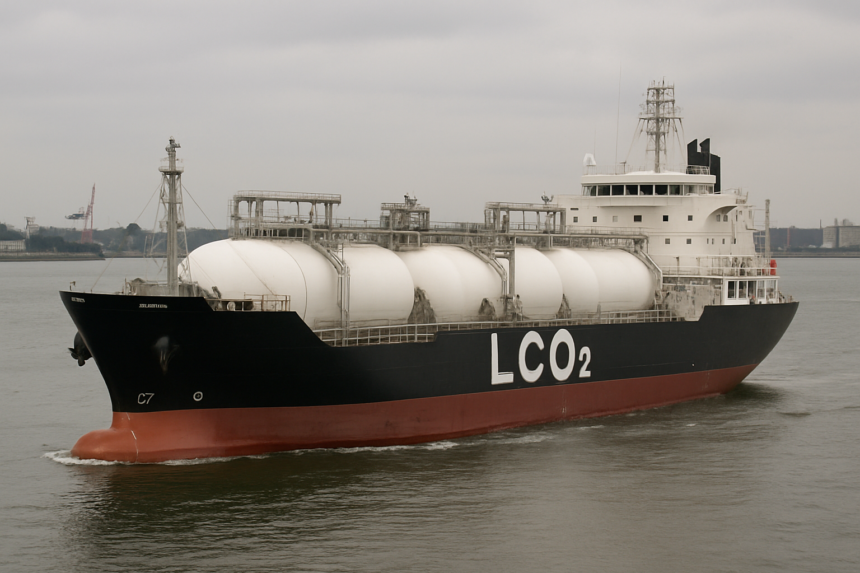
Japan’s Kawasaki Kisen Kaisha (K Line) and Malaysia-based MISC have entered into a time charter agreement with the Northern Lights joint venture for a newly constructed liquefied carbon dioxide (LCO2) carrier. This vessel boasts a capacity of 12,000 cubic meters, marking a significant step forward in the logistics of transporting carbon emissions.
The Contract Details
This latest contract follows a similar agreement signed on January 29, 2026, also for a 12,000 cubic meter LCO2 carrier. The addition of these vessels into the Northern Lights fleet demonstrates a commitment to advancing carbon capture and storage technologies. This initiative aligns with global efforts to mitigate climate change impacts and is pivotal in promoting sustainable shipping solutions.
Market Significance
The contracts reflect the maritime industry’s increasing adaptation to environmental regulations and the push for lower carbon footprints. By utilizing dedicated LCO2 carriers, K Line and MISC are positioning themselves as leaders in a niche market that is expected to grow as countries implement more stringent climate policies.

Operational Implications
These vessels are not just innovations in design but represent crucial logistical frameworks for the evolving energy transition. Cross-border carbon transportation necessitates robust operational strategies, including precise scheduling and efficient bunkering processes to ensure timely delivery. The vessels’ operational readiness will be a key factor for clients aiming to comply with emerging carbon capture obligations.
Behind the Headline
The collaboration between K Line and MISC in securing the new charter for LCO2 carriers emphasizes the strategic shift within the maritime industry towards sustainability. As regulatory environments evolve to address climate challenges, operators must prepare for intricate logistics and potential cost implications associated with carbon transportation. The successful deployment of these carriers will serve as a benchmark for operational efficiency in managing emissions, impacting charter parties and laytime negotiations as interest in the carbon capture market increases.