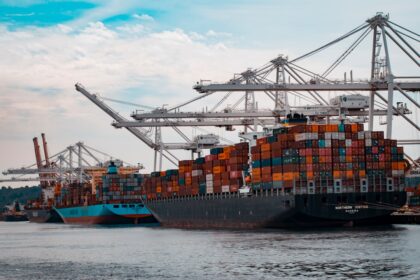
Spot container shipping rates from Asia to the U.S. have experienced notable declines, particularly for the West Coast, while rates to the East Coast showed mixed outcomes. As of the latest report, rates for the West Coast are now between $5,800 and $7,100 per 40-foot equivalent unit (FEU), reflecting a general downward trend.
According to Xeneta, a prominent ocean and freight analytics firm, rates to the East Coast remained more stable, ranging from $7,600 to $9,150 per FEU. Emily Stausboll, a senior shipping analyst at Xeneta, indicated that additional declines are expected as August approaches. However, the rate of decrease is significantly slower than increases witnessed during market spikes.
Market Dynamics
In an environment characterized by growing container capacity and easing demand, the industry observes emerging patterns involving blank sailings and rate fluctuations. Stausboll noted a nascent trend of blank sailings appear on Asia-to-North America trade routes, although rates remained at favorable levels for carriers. The cautious stance taken by carriers to reduce capacity stems from fears of relinquishing market shares to competitors, thereby hindering substantial adjustments to counteract falling rates.

Furthermore, Drewry, a supply chain advisory group, reported a decline in rates for both coasts due to heightened capacity. The firm identified six blank sailings scheduled for the transpacific trade route next week, down from nine in the preceding week, revealing a growing supply-demand imbalance.
Impact of Geopolitical Factors
Simultaneously, tensions between the United States and Iran have raised bunker costs, prompting carriers to consider the geopolitical landscape in their pricing strategies. Despite these external pressures, the operational environment for most carriers remains unchanged, as the majority of vessels are not affected by transit issues in the Strait of Hormuz or the Red Sea, according to Stausboll.
Judah Levine, head of research at Freightos, remarked that while crude prices rise amidst geopolitical tensions, the overall trends in container rates continue to reflect a slight easing. He noted that prior announcements of significant rate increases and surcharges have lingered without execution due to the cooling demand post a peak period earlier in the summer.
Behind the Headline
The recent fluctuations in container shipping rates underscore the complex interplay between supply chain management and market demand. Carriers face the challenge of balancing available capacity with the need to maintain competitive pricing without sacrificing volumes to rivals. Moreover, external factors, including port congestion and crude price volatility, play pivotal roles in shaping operational strategies. As conditions evolve, industry stakeholders should monitor how carriers navigate these dynamics, adjusting their capacities and pricing strategies in response to ongoing market pressures.