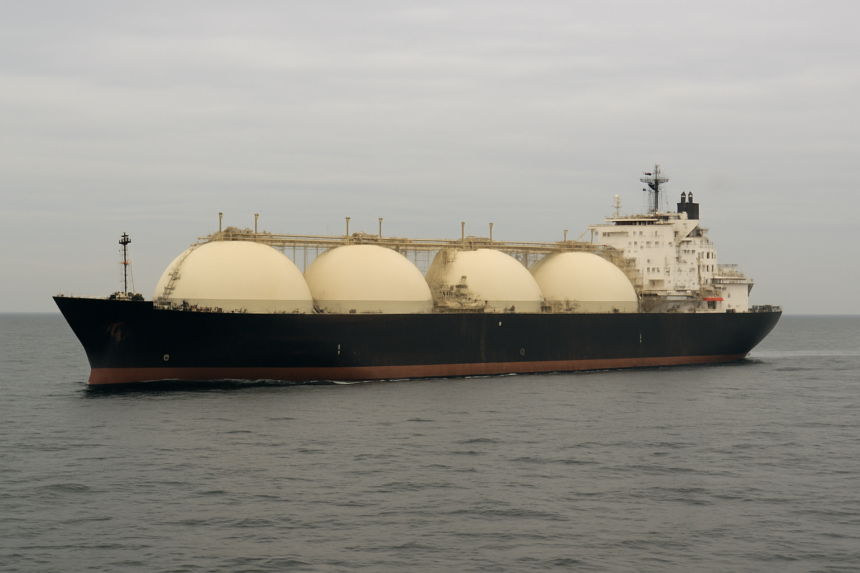
The Qatari LNG tanker Al Rekayyat remains stationary near the Strait of Hormuz following a projectile strike that occurred overnight on Tuesday. Ship tracking data indicates that the tanker, which was loaded with liquefied natural gas, was hit on its port side and is currently awaiting salvage operations while efforts to extinguish a fire in its engine room are ongoing.
Industry sources confirm that the fire poses a potential risk of explosion, prompting immediate measures to ensure the safety of the vessel. Fortunately, all crew members were successfully evacuated, and reports indicate that the LNG stored in the tanker remains intact, with no breach in the storage tanks detected. One source indicated that the vessel could remain in its current condition as long as it does not come under further attack.
The Incident
The Al Rekayyat’s position near the entrance of the Strait of Hormuz, close to Oman’s coast, highlights the strategic significance of this maritime corridor. The risk of an explosion due to the fire has been assessed as serious, with experts noting that breaching a main tank would lead to catastrophic consequences. Salvage operations are being planned with two vessels, a tug boat and a service ship, positioned nearby to assist.

Geopolitical Context
This incident marks the first time since the escalation of hostilities between the U.S. and Iran that a Qatari LNG vessel has been struck. Qatar, known for its role as a mediator in discussions involving the United States and Iran, has condemned the attack, with its foreign ministry summoning the deputy Iranian ambassador to express its concerns. The escalation of hostilities in this critical shipping area has significant implications for regional stability and trade.
The Operational Read
For operators in the LNG shipping sector, the incident involving the Al Rekayyat underscores the growing geopolitical risks inherent in operating through the Strait of Hormuz. The potential for further attacks in this region necessitates a reassessment of risk management strategies, particularly for vessels transiting this key chokepoint. The intact condition of the LNG tanks mitigates immediate disaster, yet the incident could lead to increased insurance premiums and heightened war-risk assessments affecting future operations. Operators should remain vigilant as tensions between regional powers continue to evolve, potentially altering risk profiles across the broader shipping sector.