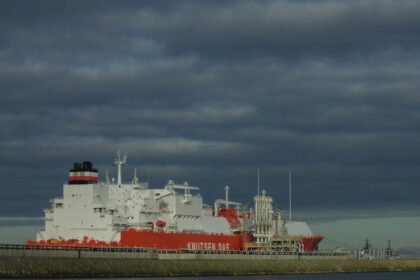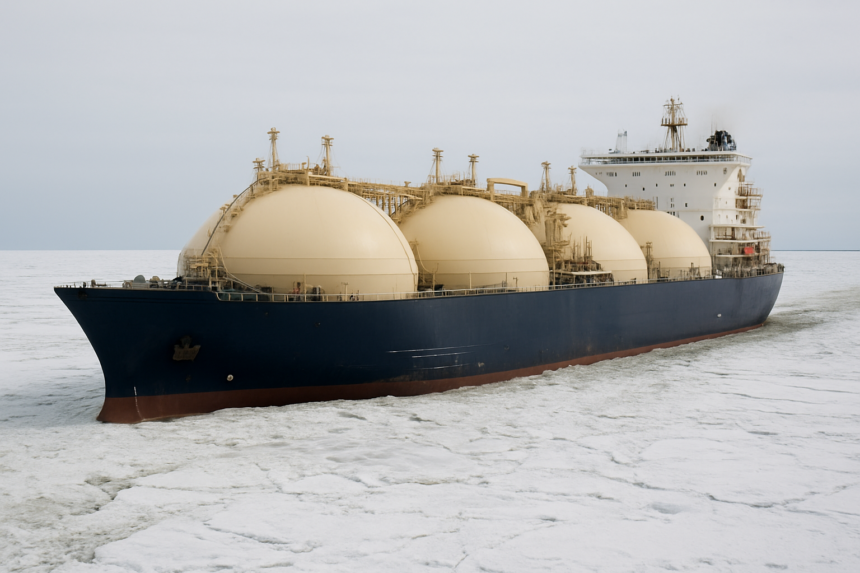
On Thursday, Russia signaled a significant stride in its Arctic LNG ambitions with the launch of the Konstantin Posyet, the second domestically built Arc7 icebreaking liquefied natural gas (LNG) carrier. The vessel, named during a ceremony attended virtually by Prime Minister Mikhail Mishustin, is set to enhance logistical capabilities for the Arctic LNG 2 project implemented by Novatek.
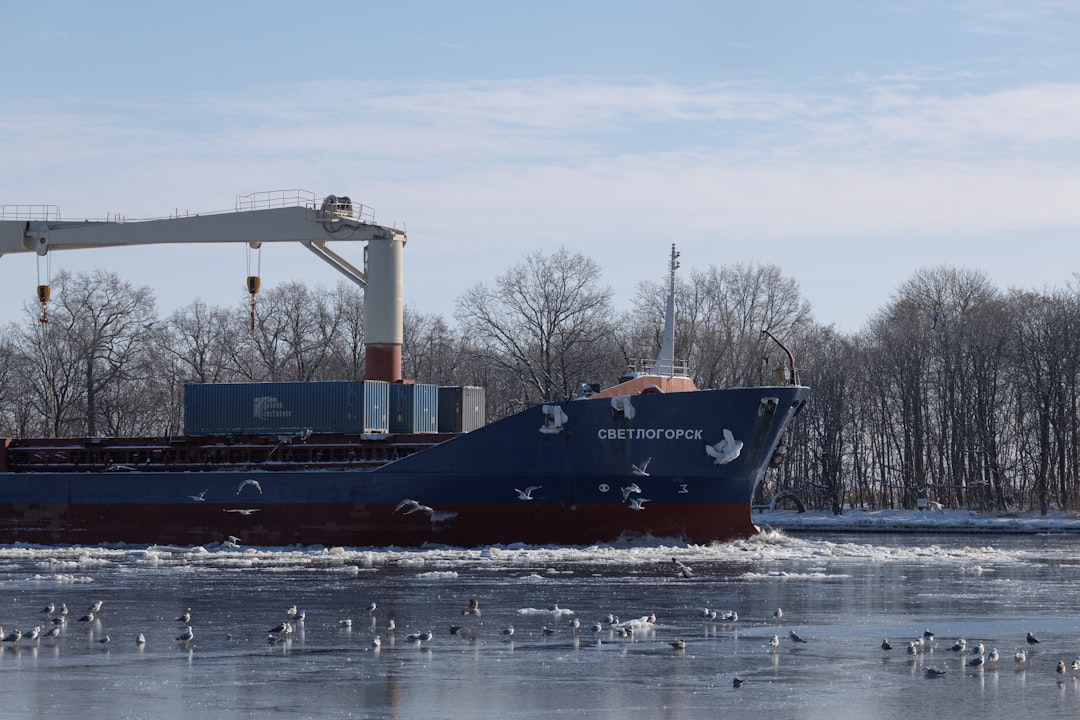
The Konstantin Posyet
The Konstantin Posyet is a substantial addition to Novatek’s fleet, with a cargo capacity of 172,600 cubic meters of LNG. Recently completing sea trials, the vessel is anticipated to enter commercial service in the coming months. This development follows the commissioning of its sister ship, Alexey Kosygin, in December 2025, marking the second Arc7 vessel built at the Zvezda shipyard in the Far East.
The arrival of the Konstantin Posyet is pivotal for bolstering the operational capacity of the Arctic LNG 2 project, which has faced significant hurdles in assembling a reliable export fleet. Often disrupted by sanctions that have targeted both the project and associated shipping assets, the establishment of a capable fleet is critical to sustaining LNG exports from the region.

Strategic Fleet Expansion
Novatek’s strategy hinges on accessing three Arc7 carriers, which comprise the two Zvezda-built vessels and the South Korean-built Christophe de Margerie, originally intended for the Yamal LNG project but later redirected due to sanctions. Sources close to the shipbuilding program hint at plans to launch a third Arc7 vessel—either the Pyotr Stolypin or Sergei Witte—before year-end, potentially expanding Novatek’s operational diversity ahead of the demanding 2026-27 winter navigation season.
The push for an enhanced fleet aligns with Rosatom and Sovcomflot’s plans to initiate year-round navigation for Arctic LNG 2. As new generation Arc7 carriers commence operations, experts believe that achieving reliable Arctic exports has become increasingly feasible.
Technological Advancements
The technologically advanced Arc7 vessels are engineered for independent operation in Arctic conditions, capable of navigating through ice that is up to two meters thick. Officials noted that the Konstantin Posyet epitomizes the progress in Russia’s Arctic transport infrastructure and shipbuilding capabilities, although a notable portion of its construction relied on Korean supplier Samsung Heavy Industries.
At the naming ceremony, Sovcomflot Chief Executive Igor Tonkovidov emphasized the vessel’s advanced icebreaking technology and environmental standards, underscoring its design for year-round operations along the Northern Sea Route.
Behind the Headline
The launch of the Konstantin Posyet is not merely a symbolic feat; it represents a strategic response to both domestic and international challenges in Arctic LNG shipping. For operators, the enhanced capabilities of the Arc7 fleet facilitate a robust logistics chain, particularly in light of recent sanctions that have restricted access to foreign shipbuilding technologies. As the industry anticipates the third vessel’s arrival, monitoring the deployment dynamics along the Northern Sea Route will be critical, especially with plans for continuous navigation during winter months. The operational success of these vessels may very well define Russia’s future in LNG exports from the Arctic region amidst a transforming geopolitical landscape.