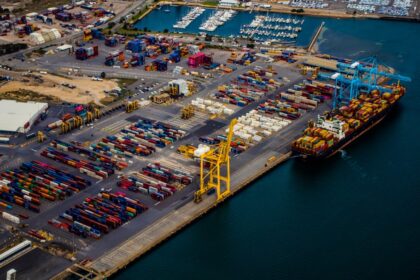
The Port of Los Angeles has concluded its strongest three-month cargo stretch on record, highlighting a resilient U.S. import market as consumer demand continues to outperform expectations ahead of the holiday season.
In August, the port reported handling 955,907 twenty-foot equivalent units (TEUs), contributing to a record total of over 2.9 million TEUs for the months of June, July, and August. This is the busiest three-month period in the port’s history, as confirmed by the port’s Executive Director Gene Seroka.
Strong Performance in Context
While August’s total was roughly flat compared to the previous year, it exceeded the port’s five-year average for the month by 6%. Loaded imports stood at 500,302 TEUs, consistent with the prior year and representing a 7% increase over the five-year August average. In contrast, loaded exports decreased by 9% year-over-year, totaling 115,561 TEUs, while empty container movements rose by 4%, reaching 340,044 TEUs.


Through the first eight months of 2026, the Port of Los Angeles reported handling just over 7 million TEUs, reflecting a year-to-date increase of 1.5% compared to 2025, and 5% above its five-year pace. This strong performance is complemented by the neighboring Port of Long Beach, which reported its busiest August on record, with both San Pedro Bay ports together processing nearly 1.88 million TEUs for the month.

Future Projections and Market Dynamics
Current trends suggest an upward trajectory, with the National Retail Federation and Hackett Associates predicting September will emerge as the busiest month for imports at major U.S. container ports, with volumes expected to reach 2.31 million TEUs—up 9.6% from last year. Seroka noted that retailers are preparing for strong demand as they replenish inventories, particularly ahead of the holiday shopping season.
Trans-Pacific freight rates currently favor West Coast routes, making Los Angeles an attractive option for importers, especially as the efficiency of moving cargo through the port enhances overall logistics economics. Despite challenges such as elevated fuel prices and tariffs, retailers maintain a positive outlook, backed by a resilient consumer base.
Behind the Headline
The operational realities at the Port of Los Angeles underscore a broader trend in supply chain dynamics where timely cargo movement and favorable freight rates are crucial for operators. As the year progresses, the consistency of import volumes could influence future port capacity planning and resource allocation. Stakeholders should stay vigilant, as signs indicate potential easing of import volumes in the following months. The interplay between international trade routes and local economic conditions will remain a key factor for the port’s performance and the wider logistics landscape.