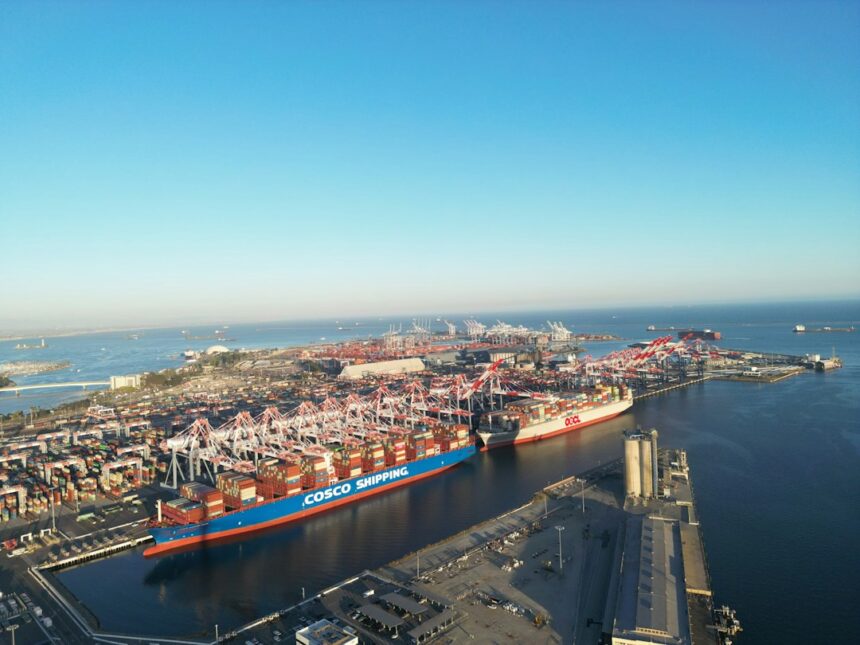
The Port of Los Angeles has set a new record, handling 1,042,652 twenty-foot equivalent units (TEUs) in September, marking the busiest month in its 118-year history. This total surpassed the previous record of over 20,000 TEUs, achieved in July 2025. The surge in cargo volumes is attributed to strong consumer demand and strategic changes in global trade routes.
Record-Breaking Performance
September’s performance capped a remarkable quarter, with nearly 3 million TEUs processed between July and September. In total, the port managed close to 4 million TEUs over a four-month period starting in June, another all-time high for the facility. The Executive Director of the port, Gene Seroka, noted that resilient consumer demand and importers’ efforts to replenish inventories have significantly contributed to these figures.
In September, loaded imports reached 545,696 TEUs, marking a 19% increase compared to the previous year, while loaded exports saw a 10% rise, totaling 125,751 TEUs. Additionally, empty container movements also set a record at approximately 371,206 TEUs.

Factors Contributing to the Surge
Seroka attributed this impressive performance partially to improved certainty surrounding tariffs, which have decreased from earlier levels in the year, allowing importers to stabilize their inventory levels. The resurgence of consumer spending, alongside disruptions impacting the Suez and Panama Canal routes, has further fueled the throughput at Los Angeles.
The National Retail Federation’s latest import forecast has been revised upward; September is now anticipated to be the busiest month for container imports at major U.S. ports. Previously, retailers had accelerated shipments earlier in the year due to anticipated tariff changes and supply chain uncertainties, which created expectations for an earlier peak. Contrary to these predictions, cargo volumes have remained elevated.
Los Angeles has emerged as one of the principal beneficiaries of this sustained demand, surpassing 1 million TEUs for the first time in June and maintaining its momentum through subsequent months.
Industry Outlook
As the year progresses, companies are adapting their supply chain strategies in response to ongoing uncertainties within global trade. Harvard Business School professor Willy Shih emphasized the shift from cost optimization to a model that prioritizes flexibility in sourcing, manufacturing, and logistic operations.
For the first nine months of 2026, the Port of Los Angeles has handled nearly 8.1 million TEUs, reflecting a 3% increase over the same period last year. Despite facing challenges from tariffs, high fuel costs, and geopolitical disturbances, the port continues to manage cargo at an unparalleled pace. The current trend, however, raises questions about its sustainability as the National Retail Federation has projected a potential easing of U.S. import volumes in the months of October and November.
Behind the Headline
The record-setting throughput at the Port of Los Angeles serves as a clear indicator of the shifting landscape within international trade dynamics. Operators must remain vigilant and adaptive, considering the continuous uncertainties that affect cargo forecasting. The interplay between trade policy, consumer behavior, and logistical adaptations will continue to shape the operational realities for shipping lines and supply chain stakeholders. Monitoring evolving trade patterns and adjusting routing and inventory strategies will be crucial as the global market navigates ongoing challenges.