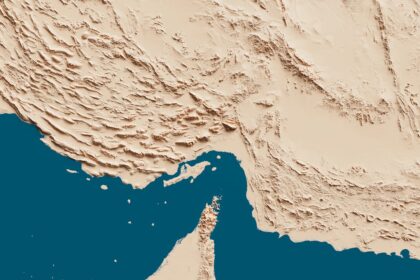
The International Maritime Organization (IMO) has issued a directive for thousands of vessels stranded in the Persian Gulf to remain stationary as it initiates the evacuation of over 11,000 seafarers due to heightened conflict in the region. Released on Wednesday, the guidance emphasizes the ongoing hazards in the Strait of Hormuz, particularly following a recently established Memorandum of Understanding between the U.S. and Iran.
The Evacuation Plan
Vessels affected are instructed not to move but to wait until they are contacted by the IMO through a coordinated mechanism that involves the U.K. Maritime Trade Operations (UKMTO), France’s MICA Center, and relevant coastal authorities. Ships will eventually be directed to a waiting area off the coast of Oman, where they can choose between two exit routes: a northern passage coordinated by Iran or a southern corridor overseen by Oman and the United States.
The choice of exit route rests with shipowners and masters, who are expected to perform their own risk assessments before proceeding. The IMO has made it clear that while it provides the overall operational framework for the evacuation, the responsibility for navigational routing lies with the coastal States.


Operational Challenges and Risks
Another critical aspect of the operational guidance is the designation of the traditional Traffic Separation Scheme (TSS) as unusable due to the reported presence of mines. Instead of using the TSS, ships will navigate through temporary corridors, with routing instructions managed by the coastal states. The presence of mines, heavy traffic, and other navigational constraints pose significant risks, as highlighted by the IMO.
The current evacuation initiative follows an IMO contingency plan developed in March that had categorized the situation in the Gulf as increasingly dire, with estimates suggesting that nearly 20,000 seafarers were aboard over 3,000 vessels unable to exit due to escalated maritime attacks. Although the IMO indicates that all necessary safety assurances have been secured for the evacuation operation, it warns that movements could still be postponed or rerouted if the regional situation worsens.
Why It Matters
The ongoing situation in the Persian Gulf has profound implications for operators and seafarers alike. The directive to remain in position highlights the critical focus on navigational safety for crew and vessels in hazardous waters. Waiting for communication before taking action will enable a more organized evacuation strategy, although it also places added pressure on shipowners to assess risks accurately while ensuring crew safety. As commercial traffic gradually returns, the evolving conditions in the Strait of Hormuz require careful monitoring by industry stakeholders to adapt to any changes in operational guidance.