

In a significant move for US shipbuilding, HD Hyundai Co has announced a partnership with Kiewit Corp to develop a new advanced shipyard in the United States. This deal, finalized on October 23, aligns with broader efforts to enhance domestic shipbuilding capacity, particularly in support of the US Navy.
Project Overview
Set to begin construction in 2027, the facilities are projected to commence operations by 2029. The initiative is expected to contribute approximately 3,000 jobs in the domestic workforce, revitalizing the shipbuilding industry in the United States. This announcement follows South Korea’s commitment to invest $150 billion into the US shipbuilding sector as part of a larger $350 billion investment package aimed at securing favorable tariff conditions. The creation of this shipyard signifies a strategic partnership focused on both military and commercial maritime projects.
Joint Venture Focus
The collaboration between HD Hyundai and Kiewit will facilitate the establishment of a joint venture tasked with identifying opportunities for the production of US Navy support vessels, alongside commercial shipbuilding prospects. This venture also encompasses the supply of ship blocks and modules, addressing the needs of existing US shipyards and reinforcing local capabilities. South Korea’s pledge to enhance shipbuilding cooperation with the US fits into a broader geopolitical context, where increased military readiness is a priority.


Future Implications for the Industry
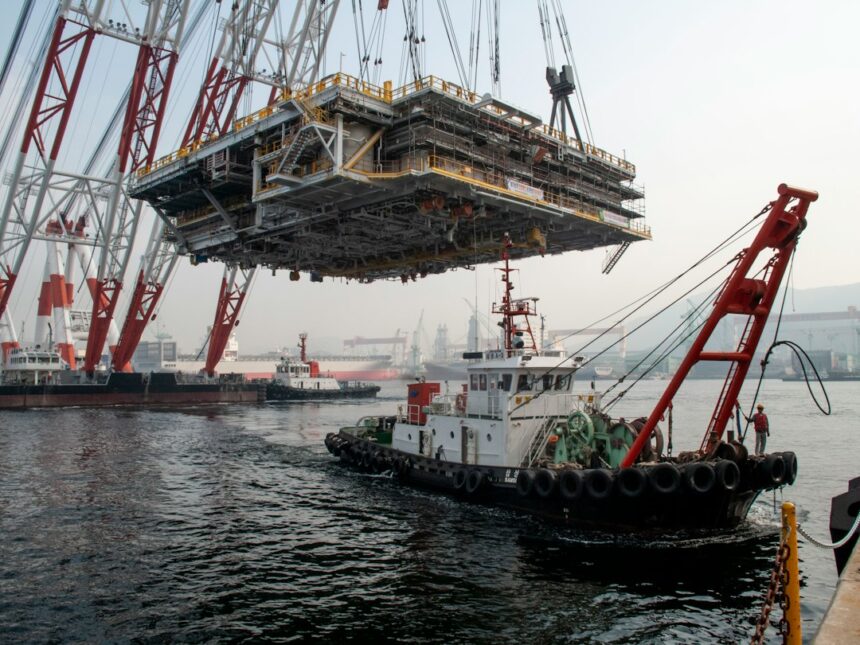
The entry of HD Hyundai and Kiewit into the US shipbuilding market comes at a time when the industry faces challenges in meeting domestic demands and military requirements. By bolstering local shipbuilding infrastructure, the project is expected to not only create jobs but also stimulate technological advancements and innovation within the sector. Moreover, this investment may encourage further partnerships and collaborations in the maritime industry, transforming the landscape for US shipbuilding.
Behind the Headline
This new shipyard construction exemplifies a broader trend in maritime industry revitalization, emphasizing the importance of local capabilities in both military and commercial sectors. Enhanced shipbuilding capacity could lead to more competitive bidding in governmental contracts, particularly for naval vessels. Industry stakeholders should closely monitor developments related to US shipbuilding policies and international partnerships, particularly as geopolitical tensions shape demand for military maritime assets. The operational implications for both shipbuilders and supply chain integrations will be critical as the project progresses.