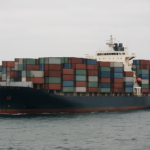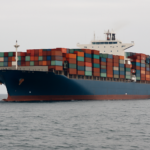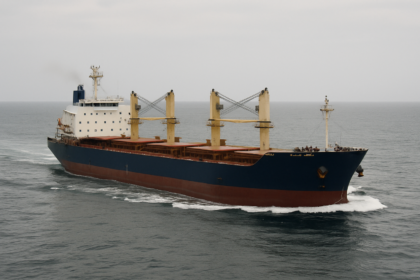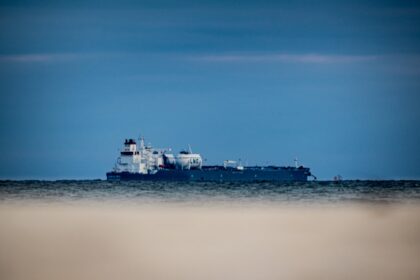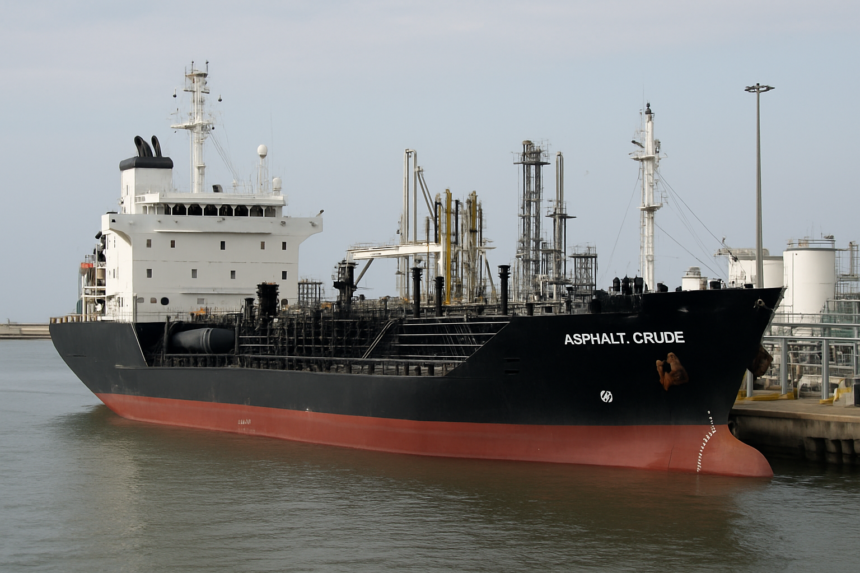
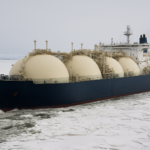
A Chinese-flagged asphalt tanker, the JIN ZHOU WAN, has successfully completed another coastwise transit between U.S. ports under the emergency Jones Act waiver, reigniting concerns over national security and domestic maritime employment. The vessel arrived in Baltimore with asphalt sourced from New Jersey, marking significant use of the national security exemption, which was originally intended for urgent defense needs.
The Background
The Jones Act typically mandates that cargo transported between U.S. ports is carried by vessels that are U.S.-built, U.S.-owned, U.S.-flagged, and principally U.S.-crewed. However, the current administration invoked emergency provisions under the Merchant Marine Act, citing disruptions linked to conflicts in the Strait of Hormuz. This provision has permitted foreign vessels to engage in coastwise trade, raising questions amongst maritime stakeholders.
The JIN ZHOU WAN, built in 2017 and operated by COSCO Shipping Asphalt Hainan, reflects the broader trend of foreign entities engaging in what critics label as commercial operations under a guise of emergency measures. Notably, this represents the ship’s second coastwise journey under the waiver, following a route from Harvey, Louisiana, to New Haven, Connecticut, reported in May.

The Industry Response
Industry groups such as the Seafarers International Union have voiced strong opposition to the ongoing waiver, demanding an end to the practice that they argue jeopardizes U.S. mariners and undercuts national interests. A union spokesperson emphasized, “The waiver very clearly is not benefiting Americans. In fact, it is putting U.S. mariners… out of work.” This sentiment was echoed by the American Maritime Partnership (AMP), which has sought congressional action to curtail the use of emergency waivers for routine commercial purposes.
Furthermore, data suggests that since the waiver’s introduction in March, 138 domestic voyages involving refined petroleum products and asphalt have taken place. Maritime experts indicate that the continuing application of this policy represents a shift in U.S. maritime operations, potentially diminishing the robust protection the Jones Act traditionally affords to domestic shipping.
The Operational Read
The increasing reliance on emergency waivers for domestic trade underscores a substantial deviation from established maritime policies. For operators and U.S. crews, this reality intensifies competition with foreign interests that could lead to labor displacement and reduced job security. While the waiver was initially justified under the context of national security, the ongoing implementation for commercial purposes raises critical questions about the future of the U.S. maritime industry and the integrity of national defense strategies. Stakeholders should closely monitor legislative discussions around Jones Act waivers and their possible implications for domestic maritime commerce.