On July 23, 2025, the mixed cargo vessel Matthew Flinders III suffered a steering failure while traversing Bass Strait, leaving it without control for more than eight hours. This incident, as detailed in a report by the Australian Transport Safety Bureau (ATSB), was primarily attributed to inadequate crew training on the vessel’s backup steering system.

The Incident
The 44.6-meter vessel was en route from Bridport, Tasmania, to Lady Barron on Flinders Island, loaded with fertilizer and agricultural machinery. Approximately four nautical miles north of Waterhouse Island, an autopilot alarm was triggered when the ship’s rudders locked hard to port, causing the vessel to enter an uncontrolled turn amidst moderate seas and a two-meter swell.
The crew initially struggled to determine the cause of the steering issue, disconnecting the hydraulic steering gear and manually centering the rudders. They employed differential thrust from the ship’s twin propellers to regain limited control, managing to prevent a grounding incident by keeping the vessel clear of the coast. After eight hours, the chief engineer identified and rectified the issue with a loose linkage arm on the rudder angle sensor, restoring steering and allowing for the continuation of the voyage.


Investigation Findings
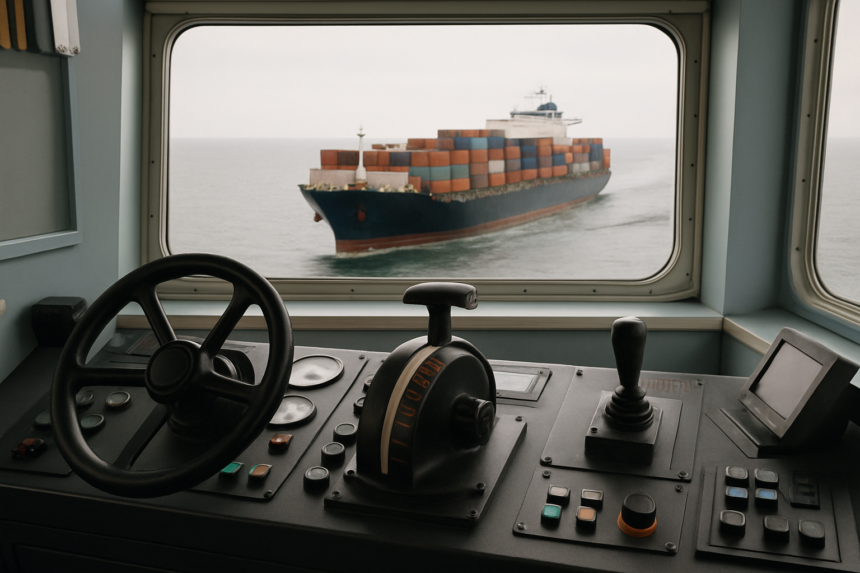
The ATSB’s investigation concluded that the initial loss of steering was due to the autopilot system losing rudder angle feedback. Despite this malfunction, the report highlighted that the ship’s non-follow-up backup system remained operational. ATSB Chief Commissioner Angus Mitchell noted the inability of the master to utilize this system stemmed from a lack of training. The investigation found that the induction training for new crew members did not adequately cover operation of the backup steering controls, which were not clearly labeled on the bridge.
Additionally, required emergency steering drills had not been conducted at the mandated three-month intervals, and previous drills had not included scenarios for operating the steering system in backup mode. This lack of preparation meant the master had not participated in any emergency steering drills prior to the incident.
Operator Response and Future Implications
In the aftermath, Bass Strait Freight has initiated updates to its crew familiarization and induction processes, including the introduction of competency assessments for new officers. The company has also simplified instructions for steering mode changeover and ensured documentation is posted both on the bridge and in the engine room.
While these updates are a positive step forward, the ATSB has issued formal recommendations urging the company to further refine its emergency steering protocols and overall safety management system. Commissioner Mitchell emphasized the critical importance of clear, concise instructions, particularly on vessels with unique operational characteristics or those experiencing a high turnover of personnel.
Behind the Headline
This incident underscores the operational vulnerabilities associated with inadequate crew training and the necessity for consistent emergency preparedness in maritime operations. For vessel operators, the ATSB’s recommendations serve as a crucial reminder of the importance of effective safety management systems that prioritize comprehensive and understandable training for all crew members. Monitoring compliance with these measures, particularly in emergency settings, will be crucial in preventing similar incidents in the future.