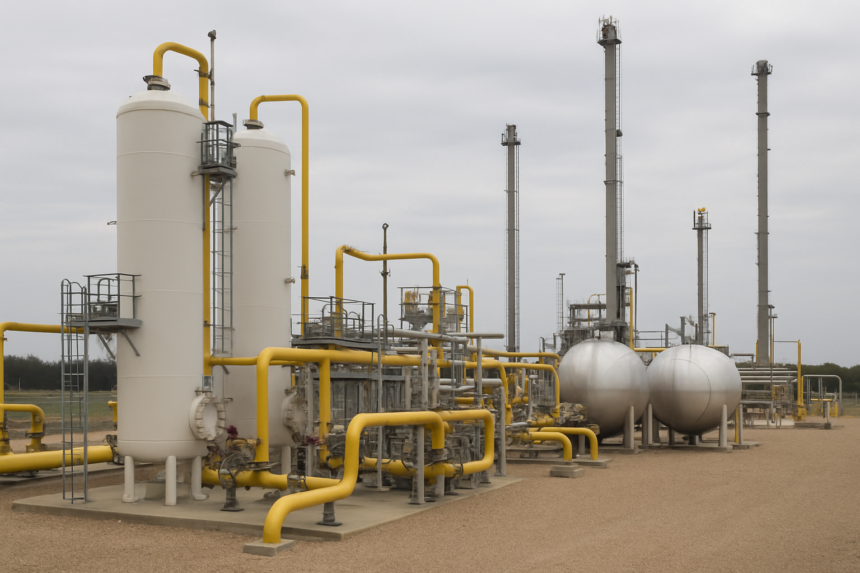
An explosion at Qatar’s Barzan gas supply facility on Sunday night has resulted in injuries to at least 54 individuals, with 18 workers still unaccounted for as of the latest updates. Qatar’s Interior Ministry has mobilized search and rescue operations to locate those missing at the country’s primary energy site in the Ras Laffan industrial area.

The explosion occurred amid efforts to restart operations at the facility, which is crucial not only for local energy production but also for Qatar’s status in the global gas market. The facility had a capacity of nearly 1.4 billion standard cubic feet of sales gas per day, primarily supporting electricity generation and water desalination in the region.
The Incident
Workers were attempting to resume operations at the Barzan facility, which had been shut down due to previous Iranian missile attacks that caused significant damage, including a fire in March. With negotiations underway to ease tensions in the Strait of Hormuz, Qatar had hoped to revitalize its gas exports. However, the timeline for recovery has been jeopardized by this latest incident.


Initial reports suggested only a limited number of injuries, but subsequent evaluations by the Interior Ministry indicated a much higher casualty count. This unpredictability adds urgency to the response efforts and reflects the broader volatility of operations in the region.
Market Impact
The timing of the explosion could exacerbate vulnerabilities in global energy markets. Qatar plays a pivotal role as one of the world’s top natural gas producers, and any disruption in its export capabilities can have cascading effects on supply chains and pricing. Given that Qatar was moving to enhance its exports after seeing a recent increase in Iran’s military operations, this event has raised alarms about the stability of energy provisions from the region.
Energy analysts are now closely monitoring how this incident may impact Qatari gas supplies and global demand dynamics, especially in light of its integral role in electricity generation and desalination in the Arabian Peninsula. The repercussions of the explosion could lead to increased volatility in energy prices as the situation develops.
Operator Response
QatarEnergy, the state-run operator of the Barzan facility, has been in the spotlight following the explosion. Their ability to assess the damage and restore operations swiftly will be crucial to mitigate disruptions. The cooperation between local emergency services and QatarEnergy has intensified with a focus on accountability and transparency in handling this incident, given the potential ramifications for energy security not just regionally but globally.
The Operational Read
The explosion at the Barzan gas facility underscores significant operational risks faced by energy producers in geopolitical hotspots. For operators, the necessity of maintaining robust emergency protocols and infrastructure resilience cannot be overstated. The incident likely reinforces the importance of contingency planning, especially in regions susceptible to external threats. Moving forward, stakeholders within the maritime and energy sectors must keep a close eye on regulatory developments and reassess risk management strategies to navigate the complexities of international energy supply chains more effectively.