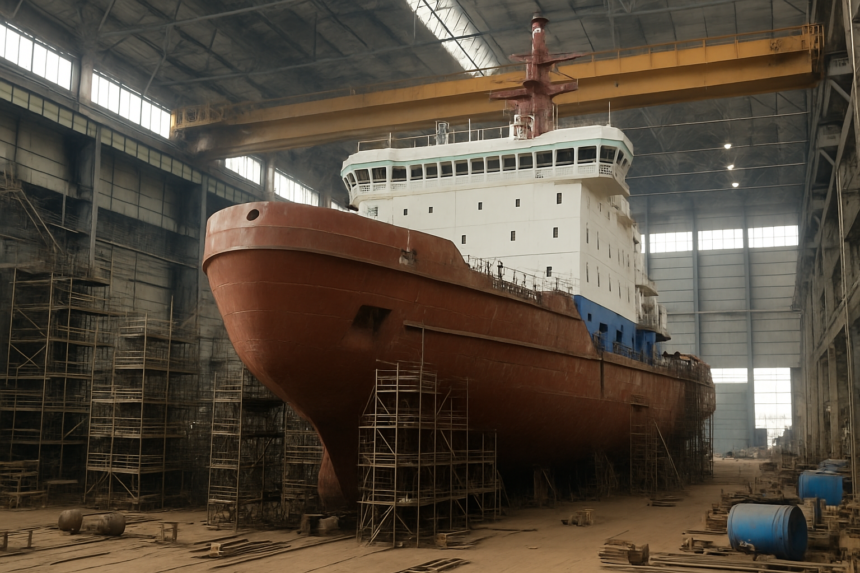
Seaspan Shipyards has completed the first major construction block of the Canadian Coast Guard’s heavy polar icebreaker, marking significant progress in the development of one of the world’s most advanced conventional icebreakers. The Vancouver-based shipbuilder revealed that over 49 blocks of the 158-meter (518-foot) vessel are under construction, precisely one year after the initial steel cut under Canada’s National Shipbuilding Strategy.
The Construction Milestone
The first “grand block,” weighing 330 tonnes, has been structurally consolidated and incorporates essential components such as propulsion motor room sections, fuel tanks, and void spaces. Construction is progressing on schedule at Vancouver Shipyards, with ongoing manufacturing at facilities on Vancouver Island.
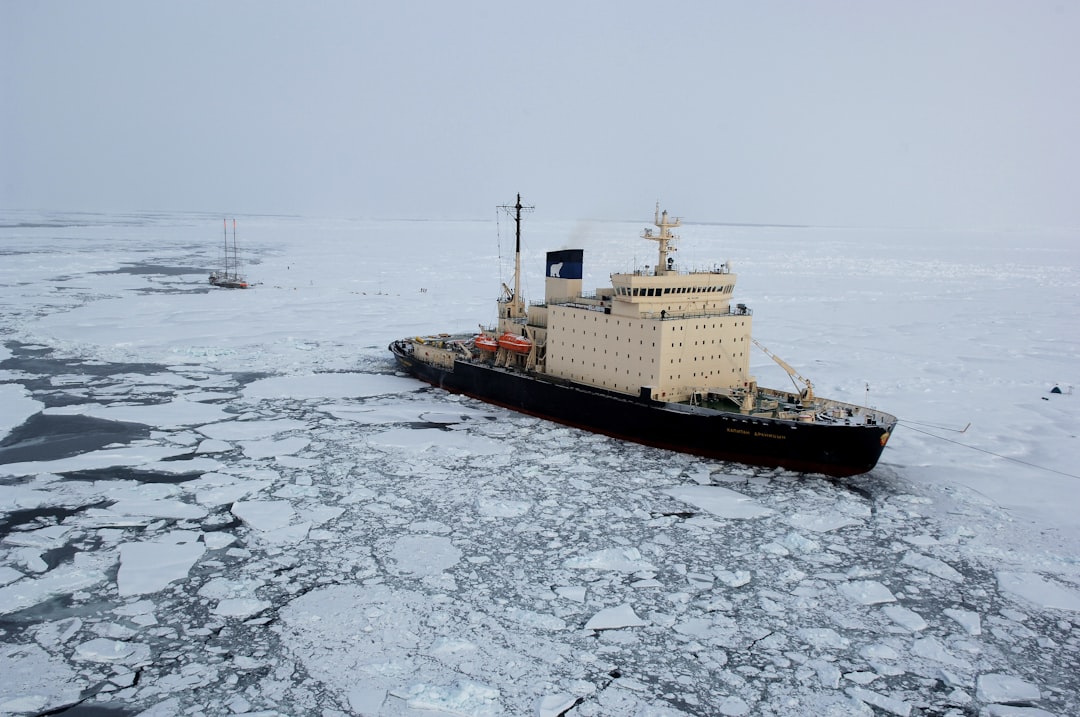
This heavy polar icebreaker is engineered to operate year-round in the high Arctic, capable of enduring temperatures as low as minus 50 degrees Celsius. To accommodate these demanding conditions, Seaspan employs unusually thick steel and specialized welding techniques, with some sections featuring steel plates as thick as 60 mm to effectively resist the severe pressures of Arctic ice.


Strategic Context and Competitors
Once completed, the vessel will function as the flagship of the Canadian Coast Guard’s icebreaking fleet and will be recognized as one of the most potent conventional icebreakers globally, displacing 26,000 tonnes. This initiative is part of a broader strategy by Western nations to enhance their Arctic capabilities amid shifting geopolitical landscapes influenced by climate change.
Seaspan secured the contract for this vessel in 2025, taking a proactive approach alongside Quebec-based Davie Shipbuilding, which was tasked with another heavy polar icebreaker based on Helsinki Shipyard’s Polar Max design. Such dual-track procurement reflects an increasing strategic focus on Arctic matters among Western governments.
In addition to the Canadian program, Seaspan has established itself as a crucial participant in the U.S. Coast Guard’s Arctic Security Cutter (ASC) program. The firm has collaborated with Bollinger Shipyards and Finnish icebreaker specialist Aker Arctic Technology to create a production-ready icebreaker design selected for up to six ASCs. Initial vessels are slated for production in Finland before transitioning to U.S. facilities for larger-scale building.
Comparative Progress and Implications
Seaspan’s rapid advancement in icebreaker construction is particularly notable when compared to the U.S. Coast Guard’s Polar Security Cutter (PSC) program, which has encountered significant delays and budget escalations. The PSC is intended as the next heavy polar icebreaker for the United States but has suffered from prolonged setbacks.
By contrast, Seaspan’s icebreaker project has successfully transitioned from prototype block testing to full-scale production in approximately two years. This achievement leverages extensive Finnish design expertise and a matured Canadian workforce skilled in employing the necessary welding techniques vital for working with thick steel suitable for Arctic specifications.
Behind the Headline
The swift pace of construction at Seaspan Shipyards underscores the increasing importance of Arctic capabilities in maritime operations. For operators and stakeholders, the successful development of this heavy polar icebreaker not only enhances Canada’s logistical and strategic framework in the north but also signifies potential competitive advantages in emerging Arctic shipping lanes. The focus now shifts to maintaining this momentum while addressing any potential challenges that may arise in the course of the remaining construction phases.