In a significant legal showdown, Mercuria Energy Group is being challenged by Norway’s Hunter Group ASA over a charter dispute involving approximately $100 million. Both parties convened in a London courtroom as Hunter’s legal representatives argued that Mercuria had defaulted on payments connected to the TD3C index, a key benchmark for global oil tanker rates.
The Legal Grounds
At the heart of the dispute lies the question of whether the Baltic Exchange should have suspended the TD3C index in the wake of the Iran war, which severely disrupted shipping routes through the Strait of Hormuz. Hunter Group Chairman Morten Astrup revealed that as of now, losses include over $100 million in total accrued charter income, interest, and additional damages resulting from Mercuria’s alleged breach of contract.
Mercuria’s claim suggests that contract conditions became untenable when tensions escalated in the region, specifically mentioning that oil shipments faced near stoppage between early March and July 3. Despite these challenges, the Baltic Exchange maintained that market assessments could still validly inform pricing during this period.


Market Implications
The ramifications of this lawsuit extend beyond the involved parties, signaling potential shifts in tanker charter agreements and pricing structures. The TD3C index is pivotal not only for crude oil shipments from Saudi Arabia but also supports a network of other contracts and derivatives worth billions.
As prices for leasing supertankers have surged to unprecedented levels — exceeding $1 million per day — Hunter Group has capitalized on its arrangement with Mercuria. The company shifted its business model to focus on chartering rather than operating its own vessels. In fact, Hunter reported a staggering 13-fold increase in profits for the second quarter, amounting to $47 million, primarily due to its fixed-rate lease from Mercuria for the DHT Puma.
The Broader Context
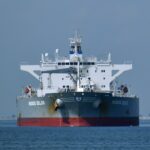
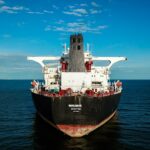
The DHT Puma, a ten-year-old supertanker leased by Mercuria until Q1 2027, stands central to this dispute. Mercuria chartered the vessel from DHT Holdings Inc. under a fixed rate but subsequently leased it back to Hunter at a fluctuating rate based on the contentious TD3C index. Hunter claims that with rising charter rates, the outstanding invoice owed by Mercuria has likely increased since the last reported figure of $67.8 million at the end of September.
Behind the Headline
The outcome of the Mercuria and Hunter Group lawsuit holds significant implications for the global shipping sector, particularly concerning how benchmark rates are set amidst geopolitical tensions. If the court rules in favor of Hunter, it could lead to a reevaluation of how indices like the TD3C are calculated under disrupted circumstances, influencing future contracts and price negotiations across the maritime industry. Operators and charterers alike should monitor this case closely, as it could herald changes in the approach to risk assessment and contractual agreements in volatile markets.