

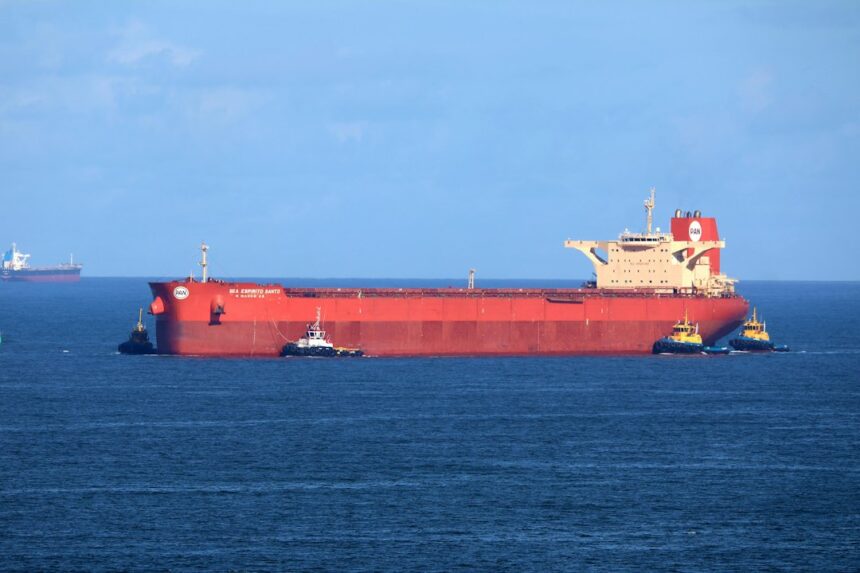
The global landscape of methanol bunkering is undergoing a substantial expansion as more ports seek to capitalize on alternative fuel opportunities. Europe, Asia, and parts of North America are witnessing the establishment of numerous methanol bunker locations, marked by increased partnerships among physical suppliers and bunker vessels.
Current Developments in Methanol Bunkering
In Europe, the Amsterdam-Rotterdam-Antwerp (ARA) region has become a focal point, with suppliers such as TankMatch and UniBarge facilitating methanol deliveries. Additionally, operations have been recognized at essential ports including Gothenburg, Hamburg, and Immingham, as well as various levels of readiness displayed through early trials in Bremerhaven and Kiel. In Spain, prominent suppliers Repsol and Mureloil have positioned themselves to offer methanol delivery services in key ports, encompassing Bilbao, Mugardos, and Barcelona.
Meanwhile, in Asia, the development of a robust methanol bunkering network is evident. Several Chinese ports, such as Shanghai, Ningbo-Zhoushan, and Qingdao, are actively hosting bunkering operations, supported by suppliers like CIMC Enric and China Marine Bunker. Additionally, bio-methanol has been supplied in Hong Kong by firms including Sinopec and Chimbusco Pan Nation. South Korea and Japan also contribute to the expanding landscape, with methanol operations reported in Busan, Ulsan, Yokohama, and Kinoe.

More Read
Challenges and Future Prospects
Despite these advancements, the Maritime and Port Authority of Singapore has noted a lack of methanol bunker sales for seven consecutive months, raising questions about the market viability in this region. However, the Port of Houston recently demonstrated potential with a ship-to-ship operation delivering 2,000 mt of methanol to the vessel Tangier Maersk as part of the emerging U.S. market.
The availability of bunker barges and chemical tankers equipped for methanol transfer has increased, with vessels like Golden Centaurus and Eika Maru participating in methanol deliveries across various ports. Notably, many of these vessels also supply conventional fuels and biofuels, illustrating flexibility in operations amidst evolving market demands.
Looking ahead, a host of ports—including VO Chidambaranar, Mumbai, and Long Beach—are investigating the development of methanol bunkering capabilities. Specific plans and timelines remain undetermined, but significant interest suggests a growing trend within the industry to adopt methanol as a primary fuel source.
Behind the Headline
The expansion of methanol bunkering operations reflects a critical shift within the maritime fuel sector, driven by environmental considerations and evolving regulatory frameworks. Operators and owners must navigate the logistical complexities of integrating new fuel types into existing infrastructures, including the training of crews and compliance with safety standards. The market’s response to methanol viability—evident in stagnant sales in Singapore—highlights the challenges of balancing readiness against actual demand. Future monitoring of emerging ports, particularly in regions like India and the U.S., will be essential to understanding the trajectory of methanol as a mainstream alternative fuel source in global shipping.