

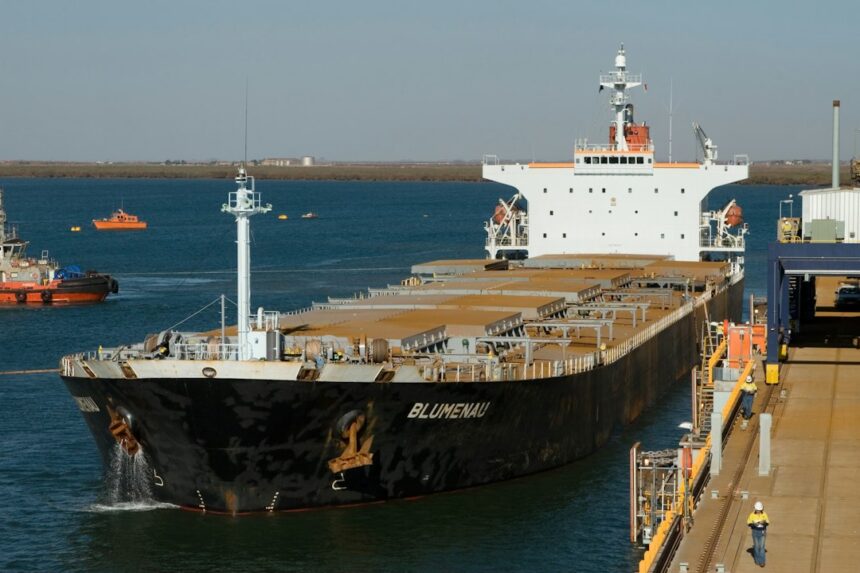
The Jones Act waiver, initially designed to allow foreign vessels to operate in U.S. domestic trades, is facing renewed scrutiny from Congress. Rep. Salud Carbajal (D-Calif.) has raised significant concerns regarding the compliance of foreign vessels with key immigration and tax regulations, particularly in light of ongoing reports of questionable activities.
Enforcement Questions
In an October 16 letter addressed to Homeland Security Secretary Markwayne Mullin, Carbajal expressed apprehensions about the enforcement mechanisms governing the waiver. Specific attention was directed towards irregularities associated with foreign-flagged tankers that have reportedly transported millions in petroleum products between U.S. ports without adhering to required disclosures. These revelations follow a detailed investigation that indicated potential gaps in reported voyages under the waiver.
Recent investigative reports have indicated that at least 14 previously unreported tanker voyages involving foreign vessels may have occurred, greatly expanding upon earlier findings. These issues suggest that the actual scale of foreign vessel operations under the emergency waiver may be significantly underreported, with preliminary numbers showing only 255 reported movements, raising suspicions over regulatory oversight.



Immigration and Tax Compliance
Legal concerns extending beyond maritime operations have also emerged, particularly regarding the immigration status of foreign crew members aboard vessels making domestic voyages. According to federal immigration regulations, foreign seafarers operating under specific nonimmigrant statuses may be prohibited from engaging in domestic movements, prompting further inquiry into the enforcement actions taken by U.S. Customs and Border Protection (CBP).
Compounding the issue, recent guidance from the Internal Revenue Service (IRS) clarified that income generated by foreign corporations transporting cargo domestically is classified as domestic-source income. This classification excludes such income from certain tax benefits, raising alarms over the potential tax liabilities that foreign vessel operators might be incurring under the waiver.
Operator Accountability
In his correspondence, Carbajal requested clarification from DHS and CBP regarding the legal frameworks permitting foreign crew members’ involvement in domestic voyages. Furthermore, he sought data outlining any enforcement actions taken for violations of immigration status and tax compliance. This inquiry underscores a broader call for accountability and thorough investigation into the operational practices of foreign vessels operating in U.S. waters.
Behind the Headline
The intensifying scrutiny over the Jones Act waiver signifies the need for rigorous enforcement of U.S. maritime laws. Compliance concerns regarding foreign crew immigration statuses and tax obligations expose vulnerabilities within the current regulatory framework. For operators and charterers, the implications are manifold; businesses may face increased scrutiny and enforcement actions. The situation calls for a reevaluation of the waiver’s oversight practices and could prompt legislative adjustments aimed at ensuring compliance with both immigration and tax laws as maritime trade continues to evolve.