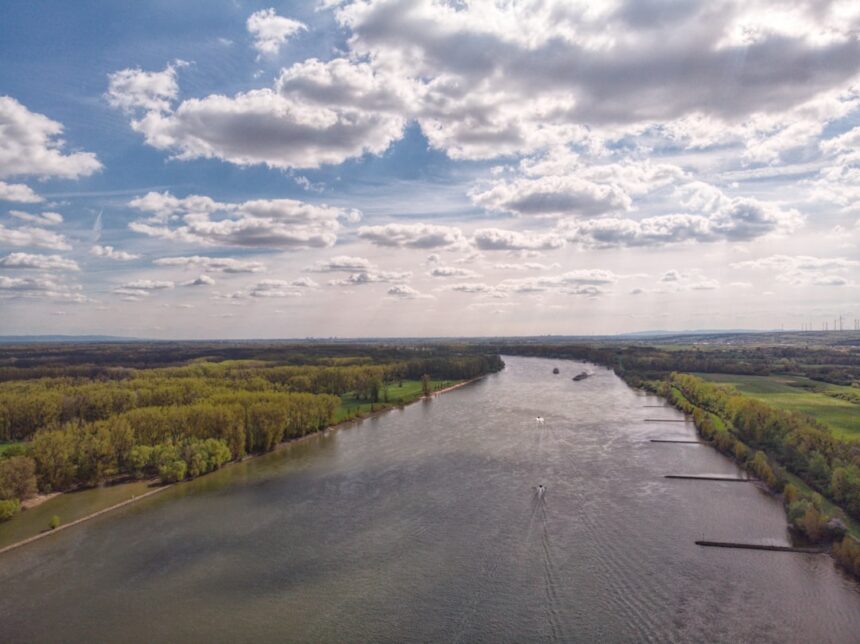
The Rhine River has recorded a significant drop in water levels, falling below 10 centimeters at the Kaub chokepoint on August 14. This marks the lowest level ever recorded at this critical section of the river, with implications for fuel supply chains and freight operations throughout Europe.
Navigational Challenges
According to the German water authority WSV, the low levels at Kaub, recognized as the shallowest point along the Middle Rhine, are expected to persist through August. Estimates indicate levels may hover around 20 centimeters next week before a slight rebound is anticipated around August 23. The previous record low was 25 centimeters, experienced in October 2018.
Market participants have warned that navigation could be completely halted in affected areas as early as next week. A European source remarked that the Rhine is effectively “split in half,” allowing only limited operations for vessels serving in the Lower Rhine region around Cologne, with severe restrictions faced further south.

Impact on Freight Costs and Supply Chains
The current restrictions have led to an increase in freight costs, particularly from the Amsterdam-Rotterdam-Antwerp (ARA) hub to Basel, with prices surging to €276.67/mt on August 14. This rise is a sharp increase from €69.30 on July 1 and €35 on June 3, as competition among barge owners intensifies due to limited navigability. A market source confirmed that a few barges remain operational, severely hampering the Rhine shipping market.
Regions in eastern France have already reported shortages of motor fuel, driven by difficulties in reaching ports along the Rhine, such as Strasbourg. The logistics crisis has prompted German states to lift Sunday driving bans on lorries to enhance truck deliveries, although this has its limitations—transporting goods by road requires significantly more truckloads compared to standard freight train capacities.
Broader Economic Implications
The transportation crisis is exacerbated by the closure of the right-bank Middle Rhine line for refurbishment from July 10 to December 12, which is a central freight route in Germany. The timing of this closure coincides disastrously with the ongoing drought, compounding the impact on inland transport capacity.
Financial institutions have started to assess the economic ramifications of the low water levels. ING estimated that these record lows could reduce Germany’s GDP growth by 0.3 percentage points this year. Deutsche Bank economist Marc Schattenberg noted that forecasts predicting a drop of 0.1-0.2 percentage points appear increasingly viable under the current conditions.
Behind the Headline
The current low water levels in the Rhine are forcing maritime operators to adapt to rapidly changing conditions that threaten both economic viability and logistical reliability. As low navigational conditions are anticipated to continue, operators may need to explore alternative transport routes, while intermodal logistics networks face mounting pressures. The impact on freight rates indicates a high-demand scenario for available barge capacity, prompting operators to reassess cost structures. Observers should monitor weather forecasts closely, as precipitation could provide temporary relief, but longer-term strategies may require significant investment in infrastructure to mitigate the effects of such seasonal variations. A comprehensive review of current logistics strategies will be crucial for companies in the region.