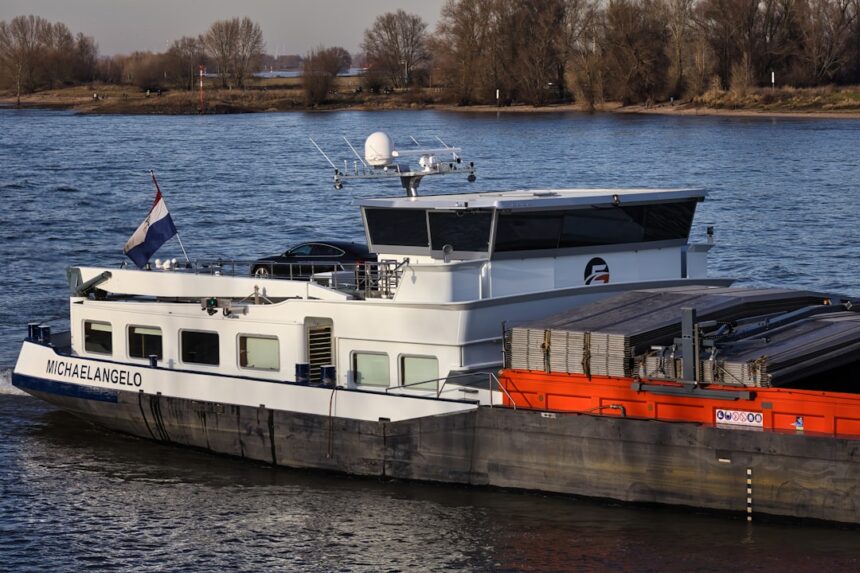
The ongoing drought in Europe is severely impacting inland shipping, particularly along the Rhine and Danube rivers. With record low water levels observed, the Rhine is at risk of becoming effectively divided, complicating the transit of goods through one of Europe’s vital navigable waterways.
Current Conditions on Major Rivers
The Rhine River, crucial for transporting goods from the industrial heartlands to the sea, is facing unprecedented low water levels that threaten to disrupt trade routes. As water levels drop, vessels reliant on deeper drafts will encounter challenges, leading to operational delays and increased shipping costs.
Similarly, the Danube River is experiencing a notable decline in water levels. This situation is further compounded by restrictions imposed on Dutch canals, which serve as essential links in the inland freight network. Together, these factors are pushing Europe’s shipping system toward a precarious breaking point.

Impact on Trade and Operations
The effects of such extreme weather conditions ripple through the supply chain. Operators are confronted with increased costs as they may need to adjust vessel load capacities or seek alternative transport methods, including road and rail. These adjustments not only elevate expenses but also prolong delivery times, complicating logistics for companies that depend on timely freight movement.
As the situation develops, shippers may need to evaluate rerouting strategies or negotiate changes in charter agreements to mitigate the impact of rising waterway restrictions. A robust understanding of these logistical challenges is essential for maintaining operational efficiency.
Looking Ahead
The continued drought raises significant concerns regarding the resilience of Europe’s inland shipping network. With climate factors increasingly influencing operational capabilities, industry stakeholders must remain alert to changing conditions that could necessitate long-term strategic adjustments.
Behind the Headline
The situation depicted by this drought emphasizes the vulnerabilities of inland shipping to climatic changes and highlights an urgent need for adaptable logistics strategies. For operators, the growing restrictions on shipping routes will likely necessitate a comprehensive reassessment of cargo capacities and routing methodologies to enhance flexibility in operations. Companies that can pivot quickly in response to these disruptions may gain a competitive advantage as traditional shipping lanes face unprecedented challenges.