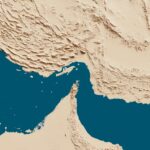
Ongoing geopolitical tensions in the Middle East are prompting Gulf states to develop alternative oil export routes, particularly as the potential for unrest in the Strait of Hormuz remains a critical concern for maritime trade.
Current Impacts on Trade Routes
According to a recent report from shipbroker Gibson, exporters from Saudi Arabia, the UAE, and Oman, all of whom have port access outside of the Hormuz Strait, are adapting their operations to mitigate risks associated with the critical maritime chokepoint. Although these nations are currently seen as the primary beneficiaries of diversifying their export routes, significant limitations still exist due to insufficient infrastructure and capacity.
Saudi Arabia, for instance, is exploring expansion of its East-West pipeline, which currently has a capacity of 7 million barrels per day (mbd). However, loading operations at Yanbu have averaged only 4.65 mbd, indicating that infrastructure upgrades are necessary to fully exploit existing capacity. Proposed expansions in collaboration with Kuwait could further enhance this system.

New Developments in Pipeline Infrastructure
Similarly, the UAE is pushing forward with a second pipeline to Fujairah that is projected to double its capacity to 3.6 mbd, offering an essential hedge against potential disruptions at Hormuz. This pipeline could become operational by late 2027, pending the completion of related port infrastructure. The stability of these developments could have far-reaching implications for the tanker market.
Meanwhile, Iraq is looking to improve its export capabilities through a series of new pipelines. A proposed 2.25 mbd pipeline connecting Basrah to the Kirkuk-Ceyhan system is in the works, although regional political relations complicate its realization. The political landscape has considerably hindered Iraq’s ability to capitalize on its Mediterranean access through Turkey, with many pipelines suffering from operational challenges.
The Future of the Tanker Market
As regional producers continue to push for expanded export routes, the key to future demand lies in which pipeline projects ultimately achieve completion and how effectively they can be utilized. Historical data suggests that prior to recent developments, export capacity at Yanbu was rarely utilized to its full potential, making the operational efficiency of new pipes a significant variable.
The Operational Read
The ongoing developments in pipeline infrastructure around the Hormuz Strait are indicative of a broader strategic shift in maritime operations. For shipping operators, the increasing focus on alternative routes will necessitate agility in logistics and a keen understanding of evolving regional dynamics. As new infrastructure comes online, operators will need to closely monitor capacity utilization rates to predict potential changes in tanker demand, particularly as some routes may cater more towards European or Asian markets. The interplay of politics and infrastructure readiness will remain critical in shaping these outcomes.