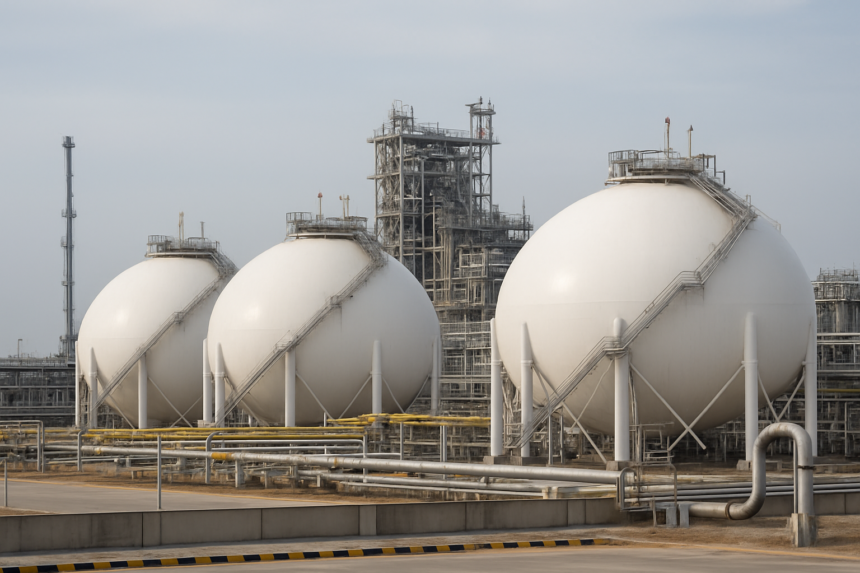
Cheniere Energy Partners has marked a significant milestone in the expansion of its Sabine Pass LNG export terminal in Louisiana by signing a crucial engineering, procurement and construction (EPC) contract with Bechtel. This contract primarily covers the construction of Train 7, a boil-off gas re-liquefaction unit, along with supporting infrastructure and the necessary tie-ins to the existing terminal.
The initial phase of Cheniere’s expansion project is projected to add over 6 million tonnes per annum (mtpa) of LNG production capacity, which will include enhancements through estimated debottlenecking. The overall Sabine Pass Expansion Project is designed to potentially accommodate up to three large-scale liquefaction trains, resulting in a total peak production capacity of approximately 20 mtpa.
Project Scope
The EPC contract with Bechtel also includes a limited notice to proceed, facilitating early engineering and procurement activities. Cheniere has indicated that this first phase is supported by long-term agreements with customers, although the final investment decision (FID) is still pending regulatory approvals and the necessary financing mechanisms.

Cheniere anticipates reaching FID by early 2027, with applications currently awaiting consideration by the Federal Energy Regulatory Commission (FERC) for the site, construction, and operation of the expansion. Similarly, the Department of Energy (DOE) is reviewing applications for the authorization to export LNG to nations without free trade agreements.
Market Context
Despite the regulatory hurdles, Cheniere’s Chairman, President, and CEO, Jack Fusco, emphasized the importance of these developments, noting that the expansion project aligns with the growing global focus on secure and flexible LNG supply, particularly as Europe and Asia vie for reliable long-term volumes. The current operational capacity of the Sabine Pass facility stands at over 30 mtpa, supplemented by five LNG storage tanks, regasification facilities, and three marine berths, solidifying its status as one of the most vital LNG export hubs in the United States.
Behind the Headline
The expansion of the Sabine Pass terminal is a testament to the increasing demand for liquefied natural gas amidst evolving energy market dynamics. For operators and stakeholders, the implications of Cheniere’s project are multifaceted, involving considerations of supply chain stability, competition for long-term contracts, and the strategic positioning of LNG terminals in global markets. As the FERC and DOE review processes unfold, attention will be focused on ensuring that the expanded capacity aligns with both domestic energy needs and international demand trends.