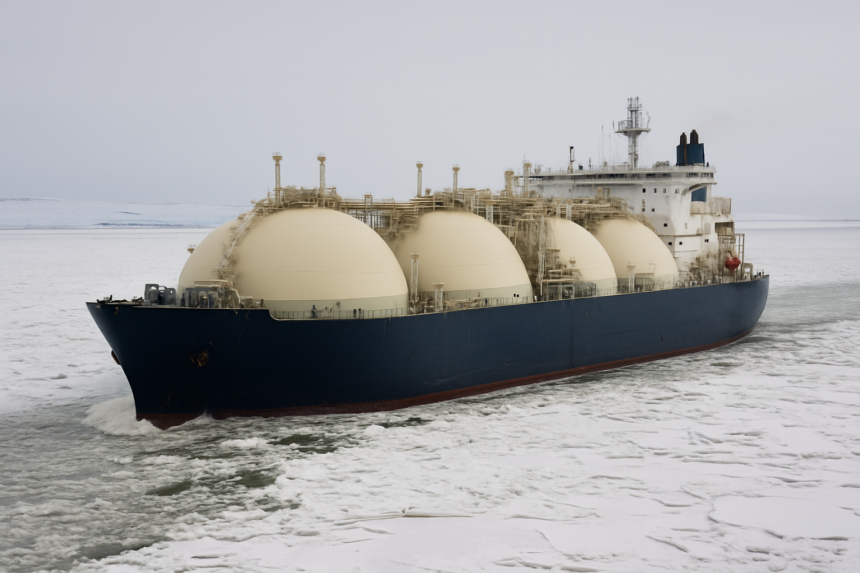
The icebreaking LNG carrier Christophe de Margerie is currently engaged in an unusually early eastbound transit of Russia’s Northern Sea Route (NSR), following the loading of liquefied natural gas at the Arctic LNG 2 project on May 26. As of May 28, ship-tracking data confirms the vessel is sailing eastward in the Kara Sea, a notably early attempt for LNG transportation along this route, where commercial shipping typically commences in mid- to late June due to ice retreat.
The Significance of Early Transit
This transit, if successful, marks one of the earliest eastbound LNG voyages along the NSR. Previous early May transits by Arc7 ice-class carriers have been exceptionally rare, with the Christophe de Margerie itself completing a milestone voyage in May 2020, delivering LNG from Yamal LNG to China. The current journey suggests that favorable ice conditions in the Russian Arctic may allow for similar early navigations again, as satellite images and ice charts indicate below-average ice concentrations in the Kara Sea, thus extending operational capacity for icebreaking carriers.
Logistical Challenges and Strategic Implications
Despite favorable ice conditions, the transit underscores mounting logistical challenges for Novatek, which holds majority ownership of Arctic LNG 2. Since late 2024, the project has faced difficulties reaching international buyers due to a combination of Western sanctions and a diminished pool of available ice-class LNG carriers. Complicating matters further is the recent incident involving the LNG carrier Arctic Metagaz, which has limited the Suez route’s viability for Russian LNG deliveries to Asia, intensifying reliance on the Northern Sea Route.

Industry stakeholders suggest that Novatek may require over 30 new LNG carriers within the next year to sustain year-round export capacity to Asian markets from Arctic LNG 2 and Yamal LNG. As a result, Russia has increasingly turned to its existing Arc7 fleet and shadow shipping arrangements to circumvent restrictions imposed by international sanctions.
The Operational Read
The operational reality for LNG carriers transiting the Northern Sea Route is becoming increasingly complex, particularly as sanctions create significant barriers to maintaining vessel availability and securing financing for new builds. Operators face the challenge of navigating possible logistical pitfalls while maximizing existing infrastructure. The trend toward early transits highlights the dual nature of ice conditions—both an opportunity and a potential risk as shipping windows expand. Stakeholders will need to continuously evaluate ice conditions and fleet capabilities to adapt to this evolving landscape, particularly as geopolitical factors further complicate existing shipping routes.