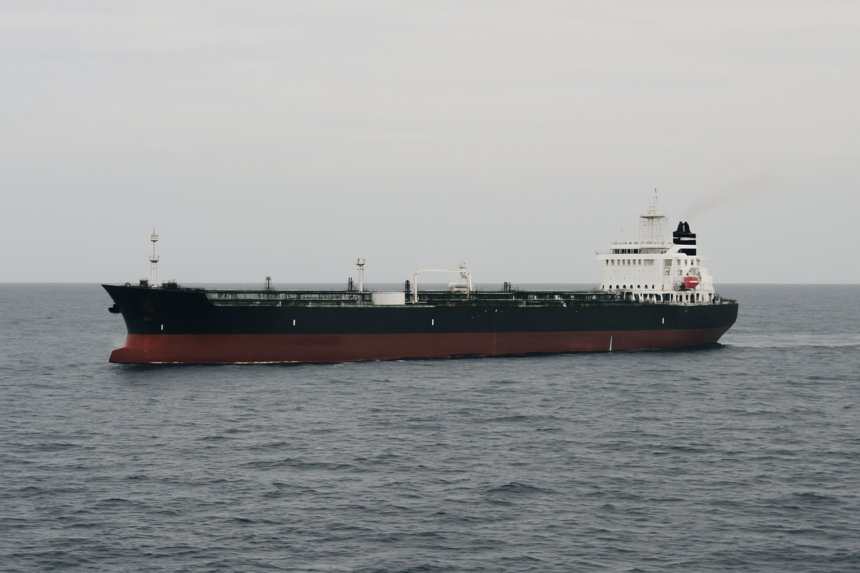
The captain of the tanker Smyrtos, detained by British authorities, has been charged with violating UK sanctions regarding Russian oil exports. Indian national Ajay Pant, aged 38, faces allegations of directly or indirectly supplying restricted Russian oil to third countries, violating Regulation 46Z9B of the Russia (Sanctions) (EU Exit) Regulations 2019.

Pant’s arrest was made following a high-profile interdiction operation carried out by the UK’s National Crime Agency (NCA) and Royal Marine Commandos in the early hours of June 14. He is scheduled to appear before the Southampton Magistrates’ Court on June 16.
The Interdiction Operation
The Smyrtos was boarded during a six-hour mission that saw the deployment of Royal Navy vessels, military helicopters, and an RAF P-8 Poseidon maritime patrol aircraft. After the operation, the ship was redirected to an anchorage off the coast of England, where it remains under investigation.


This operation signifies a notable escalation in the enforcement of sanctions against entities supporting Russia’s military endeavors in Ukraine. While the UK and allied nations have imposed various sanctions on vessels, operators, and insurers associated with Russian oil, direct interdictions have been relatively uncommon. The UK government contends that nearly 600 vessels linked to the shadow fleet have been sanctioned through its regulatory framework, while Western estimates suggest that over 700 vessels operate outside of these sanctions.
Legal Ramifications
The charges against Pant follow a trend in which maritime authorities hold vessel masters accountable for facilitating sanctions evasion. Recently, former Bella 1 master Avtandil Kalandadze pleaded guilty in a U.S. federal court for his involvement in transporting sanctioned Iranian and Venezuelan oil, underscoring the seriousness of such offenses.
British officials confirmed that the operations conducted were in accordance with both domestic and international laws, asserting the legal foundation for such interdictions as vital in the broader sanctions enforcement strategy. The investigation into the Smyrtos and its operations is ongoing, with added scrutiny on the crew, consisting of Indian and Georgian nationals, who remain aboard the vessel.
The Operational Read
This incident illustrates the operational complexities of modern maritime sanctions enforcement. For operators, this represents an increased risk of direct interdictions that could significantly disrupt operations, especially for those navigating routes potentially associated with sanctioned cargoes. Crews and management teams must maintain heightened awareness regarding compliance protocols, especially when operating in regions where legal scrutiny is intensifying. Observers should monitor subsequent legal proceedings and the responses from both the shipping community and governmental bodies as they navigate the challenges posed by sanctions enforcement.