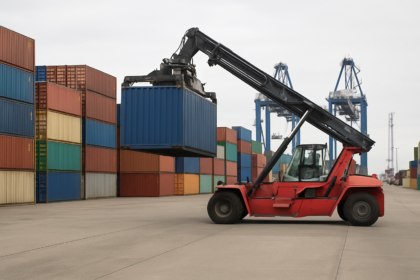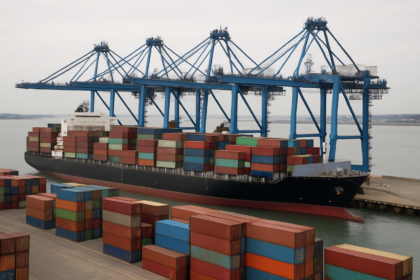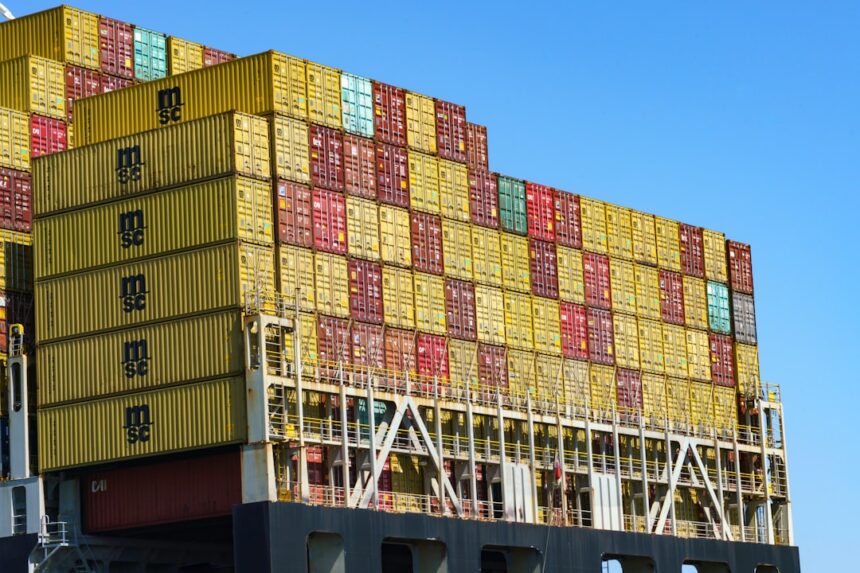
Port congestion within major Asian terminals is influencing container freight dynamics, driving carriers back toward services through the Suez Canal, as detailed in Sogese’s September Europe Container Market Update.
According to recent figures from Drewry’s World Container Index, rates for a 40ft container from Shanghai to Genoa have fallen to $4,368, a 10% decrease week on week, while the Shanghai-Rotterdam rate has reduced by 5% to $4,092. The report notes a shift in supply chain logistics as carriers reassess vessel deployment strategies in response to varying cargo demands across trade routes.
The Impact of Port Congestion
As port congestion continues to disrupt operations in Asia, carriers are strategically re-altering their services, opting for more direct routes that leverage the Suez Canal for efficiency. Andrea Monti, CEO of Sogese S.r.l, highlights that the container market is fragmenting, with freight rates, demand, and capacity diverging across major trade lanes. This current trend indicates a departure from earlier uniform capacity management as carriers tailor their operations to specific corridors.

Empty container carrier sailings on the Asia-Europe route are predicted to decrease from four to just one next week, signaling a shift toward a more stable capacity environment. Furthermore, Monti explains that shorter voyages via the Suez also effectively increase available capacity, suggesting that market behavior is becoming increasingly localized rather than globally integrated.
Carrier Responses to Market Dynamics
Recent revisions to service routes exemplify carriers’ adaptive strategies. For instance, Ocean Alliance has announced adjustments to its CPNW and MTE transpacific services, modifying port calls based on current demand from East Asia to North America. Meanwhile, COSCO and OOCL are actively enhancing their presence in the Red Sea with new services that link Chinese ports directly to Jeddah, further illustrating the ongoing recalibration of global service networks.
For shippers in Europe, the adjustments may lead to unpredictable service environments as existing routes and configurations adapt to the shifting landscape of cargo demand and pricing. This situation underscores the necessity for stakeholders to continuously monitor patterns that could affect service viability.
Behind the Headline
The maritime industry currently faces dual challenges of port congestion and fluctuating demand across trade corridors. This ongoing complexity necessitates that operators adopt flexible strategies for managing capacity and adjusting service routes tailored to market conditions. The decreasing predictability of freight availability further emphasizes the importance of real-time data analytics and monitoring by operators. Companies will need to remain agile to optimize their network plans amidst this fragmented market, ensuring they can effectively address the demands of shippers while mitigating excess capacity in less viable corridors.