Russia’s oil exports reached 142.7 million barrels in September, according to analysis from Windward utilizing Vortexa data. This figure encompasses 110.4 million barrels of crude, maintaining an output level of approximately 3.7 million barrels per day, comparable to August’s production of 3.78 million bpd as reported by the IEA.
Significantly, for the third successive month, there were no cargoes loaded on falsely flagged tankers, indicating Russia’s abandonment of this tactic. A notable shift has occurred as tankers switch to other flags, with record numbers aligning with Russia over the third quarter, marking a crucial development in the shadow fleet’s operations since early 2023.
Sanctioned Containers and Load Distribution
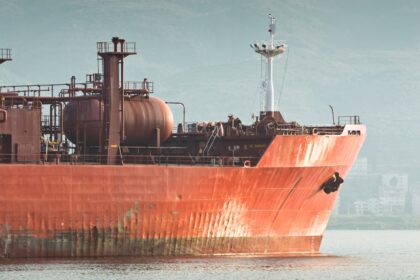
Notably, sanctioned vessels were responsible for transporting 78 million barrels, accounting for 55% of Russia’s total exports and 63% of crude oil shipments. EU-owned tankers contributed 31.5 million barrels or 22% of the total, while the remaining 23% was attributed to unsanctioned shadow fleet or other tonnage. This distribution illustrates a marked divergence by product type; EU-owned tankers accounted for 57% of fuel oil and 41% of clean petroleum products (CPP), but only 14% of the crude trade. This is largely due to the pricing of Urals crude, which exceeds the $44.10 price cap imposed by the EU and the UK.

Trends in Loading Ports
Approximately 90% of EU-owned barrels (28.8 million of 31.5 million) were loaded at Baltic ports, specifically Primorsk, Ust-Luga, St. Petersburg, and Vysotsk, where EU-owned vessels accounted for 37% of the total lifted. However, EU-owned loadings saw a decline throughout the month, plummeting from 20.5 million barrels in the first half of September to just 11.1 million barrels in the latter half — a shrinking by 46%. The most drastic reduction was observed in clean products, where loadings fell from 5.2 million to 1.0 million barrels, a direct consequence of ongoing bans on gasoline and diesel exports following attacks on refineries in Ukraine.
In the Black Sea, 68% of the 7.4 million barrels of oil exported was transported by sanctioned tankers, underscoring the shift towards this tonnage type. All of the 4.3 million barrels of crude lifted from Novorossiysk’s Sheskharis terminal utilized sanctioned vessels. EU-owned tankers were limited to diesel, with 1.2 million barrels shipped in six cargoes before September 12. The deteriorating security landscape has made it increasingly difficult for EU-owned vessels to operate in the area.
Additionally, sanctioned tonnage dominated in the Arctic and Far East regions, carrying 84% of Murmansk crude loadings. In the Far East, sanctioned vessels accounted for 61%, while unsanctioned operators managed 32% of the market. In Kozmino, 30 tankers loaded a total of 33.4 million barrels of ESPO crude, predominantly heading to China.
Ship-to-ship transfers in Nakhodka Bay complicated tracking efforts, with 8.7 million barrels handled through this method, and all Sokol crude loaded at De-Kastri (totaling 5.7 million) undergoing similar procedures.
Behind the Headline
The dynamics surrounding Russia’s oil exports are becoming increasingly complex, primarily due to the strategic shift of operators responding to evolving sanctions and security threats. The reliance on sanctioned tankers signals a adjustment in fleet logistics, reflecting the need for compliance in a tightened regulatory environment. Operators must now navigate these shifts, potentially reconsidering trade routes and vessel utilization to mitigate risks associated with security in sensitive regions. Observers should monitor how these operational trends evolve, particularly regarding export volumes and the continued efficacy of sanctions aimed at altering Russia’s energy strategies.